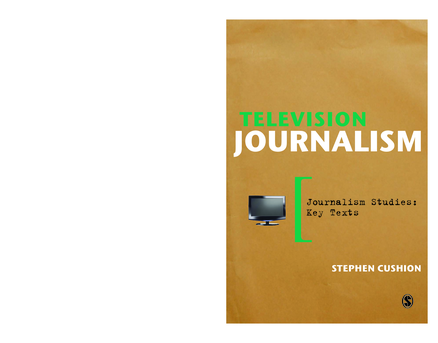
Television Journalism
Los Angeles: Sage (2012), x, 227 pp.
Contains bibliogr. pp. 196-219, index
Series: Journalism Studies: Key Texts
ISBN 978-1-4462-0741-3 (pbk); 978-1-4462-5413-4 (ebook)
"Television remains one of the most viewed, valued, and trusted sources of information available. This authoritative, persuasive account evaluates television journalism′s contribution to society from a political, economic, and cultural framework. Covering issues of ownership, control, policy, and regulation, the book is a blend of theory and history that examines the UK industry from a comparative perspective. It establishes the importance of television journalism, how it converges with other formats, and the ways in which it can survive an ever-changing terrain with the advent of new technologies and new media. Using topical references and original research, the book makes a potent contribution to television journalism studies, and is a necessary point of reference for advanced undergraduates, researchers, and academics in broadcasting, journalism, and media studies." (Publisher description)
1 The Role of news in television culture: current debates and practices in contemporary journalism, 13
PART I. HISTORY AND CONTEXT
2 From radio to television: making sense of broadcasting history, 33
PART II. TRENDS IN TELEVISION JOURNALISM
3 Redefining what's newsworthy: towards 24-hour news values and conventions? 61
4 The rise of partisan news onsumption:towards a polarisation of television journalism and audiences? 85
5 Reporting the politics of devolved nations: towards more localised television news? 115
PART III. JOURNALISTS AND SCHOLARS
6 Entering the profession: who are television journalists? 145
7 Putting television news centre stage: the past, present and future shape of journalism scholarship, 169
PART I. HISTORY AND CONTEXT
2 From radio to television: making sense of broadcasting history, 33
PART II. TRENDS IN TELEVISION JOURNALISM
3 Redefining what's newsworthy: towards 24-hour news values and conventions? 61
4 The rise of partisan news onsumption:towards a polarisation of television journalism and audiences? 85
5 Reporting the politics of devolved nations: towards more localised television news? 115
PART III. JOURNALISTS AND SCHOLARS
6 Entering the profession: who are television journalists? 145
7 Putting television news centre stage: the past, present and future shape of journalism scholarship, 169