Filter
8
Featured
2
1
Topics
2
2
2
2
1
1
1
1
1
1
1
1
1
1
1
1
1
1
1
1
1
1
1
1
1
1
1
1
1
1
1
1
1
1
1
1
1
1
1
1
1
Language
Document type
3
1
1
1
1
Countries / Regions
Authors & Publishers
Media focus
Publication Years
Methods applied
Journals
Output Type

Showrunning for Social Impact Entertainment: The Collaborative System of Rosy Ocampo & El Instituto
Deep Insights
Coyoacán, Mexico, DF: Instituto de Investigaciones Sociales; Population Media Center (2025), 580 pp.
"In our years of working with producers, we at El Instituto have seen a consistent industry demand for insights into what makes content resonate with audiences. This book, Showrunning for Social Impact Entertainment: The Collaborative System of Rosy Ocampo & El Instituto, explores the career and pro
...

"Ganz Brasilien glotzt Globo": Telenovelas in Brasilien. Ein Vergleich mit Mexiko
Berlin; Münster: Lit (2013), ix, 800 pp.
Nación TV: La novela de Televisa
México, DF: Grijalbo (2013), 203 pp.
"Aquí está la historia de medio siglo de la televisión mexicana, desde su primera transmisión una misa, hasta los líos familiares para hacerse de su control. Por sus páginas desfilan lo mismo comediantes, cantantes, productores de telenovelas, conductores de noticieros, que presidentes de la R
...
Televisa and Univision, 50 Years of Media Post-Nationalism
Global Media and Communication, volume 7, issue 1 (2011), pp. 62-68

Neue Medien und Öffentlichkeiten: Politik und Tele-Kommunikation in Afrika, Asien und Lateinamerika. Bd.2
Hamburg: Deutsches Übersee-Institut (2000), 434 pp.
"Der Band umfasst Beiträge, die sich aus der Perspektive von Entwicklungs- und Schwellenländern mit den Folgen und Politikanforderungen des kommunikationstechnologischen Fortschritts auseinandersetzen. Im Mittelpunkt stehen Fragen nach der politischen und kulturellen Bedeutung eines zunehmend plur
...
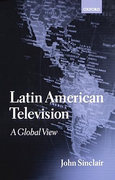
Latin American Television: A Global View
Oxford: Oxford University Press (1999), 187 pp.
"This book makes English speakers aware of the dimensions, operation, and significance of the globalisation of television in the Spanish-speaking world. Second only in scale to the market for English-language programming, the Spanish-language market embraces not just most nations of South and Centra
...
Televisa S.A. in Mexiko: Genese und jüngste Entwicklung eines kommerziellen Fernsehunternehmens im Spannungsfeld zwischen Rundfunkpolitik und Konzerninteressen
Münster; Hamburg: Lit (1995), x, 380 pp.
"Das Rundfunksystem Mexikos war von Anbeginn durch seinen kommerziellen Charakter geprägt. Diese Strukturen wurden bei der Einführung des Fernsehens übernommen. Noch stärker als beim Hörfunk war auf dem Fernsehsektor der dominierende Einfluß von wenigen privaten Unternehmern zu verzeichnen. Ih
...