"This declaration serves as a reminder that culture, cultural heritage and media policies must be a vital part of the European collaboration and European security in order to protect our democracies. We commit to upholding cultural diversity, artistic freedom and supporting media pluralism and freed
...
om at both national and European level. We also recognise the need for guaranteeing citizens’ access to trustworthy news media and to equip them with the digital skills and critical thinking abilities needed to navigate a digitised information landscape. In this light, we agree to the following guiding principles:
• Our citizens must live in societies with free and independent cultural life.
• Our citizens must live in societies where culture and cultural heritage is safeguarded for the benefit of society today and for future generations.
• Our citizens must have access to reliable information and to an information environment free of foreign interference.
• Our citizens must live in societies with free, resilient and independent media.
• Our citizens must be able to participate in public debate and democratic conversations.
• Our citizens – especially our children - must be presented with and have access to free and diverse European content.
• Our citizens must be protected against digital replicas of their personal characteristics without consent." (Page 2)
more
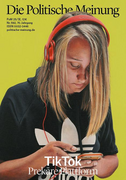
"Mit rund 1,5 Milliarden monatlichen Nutzern ist TikTok ein globaler Kommunikationsraum – und ein geopolitisches Machtinstrument. Die Plattform steht mit im Zentrum der Rivalität zwischen den USA und China. Washington drängt auf eine Abspaltung vom chinesischen Mutterkonzern ByteDance, während
...
US-Tech-Giganten wie Microsoft und Oracle als Käufer bereitstehen. Im globalen Wettbewerb geht es zunehmend um Daten, Datenhoheit und Vorteile bei der digitalen Infrastruktur. Deutschland und Europa reagieren zögerlich auf die Dynamik solcher Plattformen. Zwar gibt es Regulierungsversuche, doch ist deren Wirkung begrenzt. Noch stehen der Attraktivität und Macht digitaler Akteure kaum strategische Antworten entgegen. Die digitale Souveränität Europas bleibt damit ein politisches Schlagwort – ohne praktische Entsprechung. Besonders heikel ist die Frage politischer Einflussnahme. TikTok kann gezielt zur Stimmungsmache und Manipulation von Wahlentscheidungen genutzt werden. Warnungen vor Desinformationskampagnen, insbesondere lanciert von Drittstaaten, sind berechtigt. Doch ist die digitale Dominanz radikaler Kräfte kein Automatismus. Parteien der Mitte haben ihre digitale Präsenz zuletzt erheblich ausgebaut. Die Herausforderung liegt nun darin, die politische Kommunikation an die Logiken der Plattformen anzupassen. Gefragt ist ein doppelter Ansatz: Regulierung dort, wo Missbrauch geschieht – etwa bei Kinder- und Jugendschutz oder Wahlkampfmanipulationen –, und zugleich ein kulturelles Verständnis für die neue Medienwelt. Allein schon, weil Regulierung an Grenzen stößt, heißt es, die digitalen Räume mit eigenen Positionen zu füllen. Es ist eine Stärke demokratischer Gesellschaften, nicht auf Kontrolle zu bauen, sondern auf selbstbewusste Menschen, die mitdenken, mitgestalten und sich zu wehren wissen. Es gilt, diesen enormen Anspruch ins digitale Zeitalter zu übertragen." (Editorial)
more
"[...] Why and how does media freedom matter against the backdrop of these political, technological and economic upheavals? How has the role of free media evolved and what are we learning about its impact? The following scan of the empirical literature seeks to make a contribution to answering these
...
questions. It pulls together evidence from a wide variety of disciplines and sources that relate to the role and efficacy of free media, broadly construed as a media sector characterised by qualities of pluralism, independence and absence of repression by government or other actors across all media channels and platforms.
The sectors explored are: democracy and participation; health; peace, security and cohesion; the economy; the environment. [...]
While this paper explores the links between media freedom and various aspects of society, none of this should detract from the normative value of media freedom itself. The most fundamental function of a free press – to inform the public – is vital for human prosperity and wellbeing. Media freedom is a critical aspect of freedom of expression, which is enshrined in Article 19 of the Universal Declaration of Human Rights and includes the right to “seek, receive and impart information and ideas through any media and regardless of frontiers”. Citizens need reliable information about the issues and events that matter to them in order to make decisions that affect their lives. What this paper seeks to do is explore the extent to which this fundamental role of media freedom provides further benefits in other sectors." (Introduction, page 6)
more
"Propaganda involves the persuasive communication process to influence and convert individuals and the public at large, directly or implicitly, through the use of purposively chosen and partial, or even fabricated, disinformation [...] Regarding the understanding of propaganda, the first mistake is
...
to assume propaganda is something that only occurs under authoritarian and totalitarian regimes. Our education on how to identify, understand, and respond to propaganda has been inadequate and fails to best prepare us for informed engagement in interactive public discourse. Government, industry, and private interest groups send millions, even billions of dollars or euros to maximize audience reach and effectively control their message streams. Yet as members of democratic societies, we tend to be more or less ignorant to the true power of propaganda." (Page 153)
more
"Twenty-four highly accomplished and prominent media scholars representing ten countries provide a survey of international communication, public relations and advertising, implications of globalization, international law and regulation, global culture, propaganda, transnational media, the shifting p
...
olitics of media, trends in communication and information technology, and much more. The fourth edition includes six new contributors (Lee B. Artz, Daniela V. Dimitrova, Berna Ackali Gur, Petros Iosifidis, Perry Keller, and Nicholas Nicoli) who cover such issues as politics of global culture, global theories, global law, implications of internet and politics. Other chapters are fully updated to foreground contemporary examples and major events that have impacted our global communication environment. Collectively, new contributions and updated chapters reflect the rapid technological and communications changes that are taking place nationally and globally." (Publisher description)
more
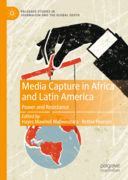
"How can current debates on ‘media capture’ be understood within the contexts of Africa and Latin America? This edited collection provides a nuanced exploration of media capture—a critical yet contested concept that examines and illuminates how media can become skewed in favour of power—whil
...
e also highlighting spaces and strategies of resistance. By adopting a South-South perspective, it brings together scholars focused on these issues in both regions, featuring a dialogue between two leading scholars, Herman Wasserman and Silvio Waisbord in the Foreword. The book not only demonstrates how media practices in Africa and Latin America are influenced by the political economy of their media systems, but also contributes significantly to advancing empirical, theoretical, and comparative research on media in non-Western settings." (Publisher description)
more
"Algorithmic news recommender systems (NRS) are present in many digital platforms. A decade after Eli Pariser introduced the infamous ‘filter bubble’ hypothesis, empirical evidence challenges the assumption that recommendation algorithms predominantly create homogeneous opinion environments. Stu
...
dies indicate that algorithmic platform use may amplify users’ political polarization. Whether the link between platform use and polarization can be causally explained by ideological news filtering, however, is still an unanswered question as rigid causal designs to test the notion of ‘filter bubble’ effects are still largely lacking. To fill this gap, we conducted two experimental studies in Germany (n = 1,786) and the U.S. (n = 1,306) with running NRS selecting news items based on the political orientation and political interest of its users. For both national contexts, results indicate that an NRS with a bias towards users’ political preferences increases ideological polarization among politically moderate individuals, supporting the notion of ‘filter bubble’ effects for this group. No such pattern could be found for affective polarization. Yet, in the German data, affective polarization among moderate users was reduced by a politically balanced NRS (as compared to a randomized news diet), while the same NRS increased affective polarization of politically extreme participants. We discuss the democratic implications of these findings against the backdrop of increasing digital news consumption." (Abstract)
more
"Previous research on political communication on Russia’s most popular social network VK has concluded that most users avoid news by not following legacy-news accounts. In this study, we expand the universe of scrutinized accounts with the mostfollowed non-legacy-news accounts (>100,000 followers)
...
that regularly publish what we theorize to be ‘explicitly political content’ (EPC; N = 355). We delineate a typology of six types of EPC accounts, calculate their aggregate follower counts, and determine how many of them were still (1) accessible from Russia and (2) publishing Kremlin-critical content in October 2022. Our findings indicate that non-critical accounts attracted 26 times more followers than Kremlin-critical accounts. Entertainmentfocused EPC accounts had seven times more followers than legacy-news accounts. As a result, they became the primary means through which non-critical EPC reached news-avoidant mass audiences. We identify three dimensions through which autocrats can interweave propaganda and entertainment and highlight promising research paths." (Abstract)
more
"Fictional TV politics played a pivotal role in the popular imaginaries of the 2010s across cultures. Examining this curious phenomenon, Sebastian Naumann provides a wide-ranging analysis of the rapidly evolving landscape of contemporary polit-series. Proposing a novel structural model of serial tel
...
evision, he offers an innovative methodological framework for comparative textual analysis that integrates sociocultural, economic, sociotechnical, narratological, and aesthetic perspectives. This study furthermore explores how the changing affordances of (nonlinear) television impact serial storytelling and identifies key narrative trends and recurring themes in contemporary TV polit-fiction." (Publisher description)
more
"This paper sought to provide an account of the epistemic modes of Muqtada al-Sadr’s charisma production on hybrid media. It did so while engaging in a virtual ethnography of videographic content on Instagram and YouTube from Muqtada and his ostensible fan pages. The affective bond conceptual fram
...
ework, derivative of the newly developed emotional entrepreneurism theory, was deployed to understand how his charisma is promoted and interpreted on hybrid media. Utilising the affective bond enabled a condensed and accessible understanding of Muqtada’s charisma that resonated with pre-existing accounts of his image. It did this by presenting al-Sadr as a symbol of legitimacy, hope, and authenticity to his followers. In accordance with the findings of this paper, Muqtada’s legitimacy symbolism was seen as both institutionally-inherited and historically-anchored. The former refers to his followers’ recognition of the legitimacy embedded within the Sadri movement’sreligio-populist ideology, and its founding fathers (Sadr Iand II). The latter connotes Muqtada’s capability to validate his inheritance of such legitimacy as a credible extension of the Sadri legacy. This was regularly demonstrated in hybrid media through the Sadri leader’s acts of reverence towards his father and his teachings, enacting anti-elitist, anti-imperial, and nationalistic policies, and acting, dressing, and speaking similarly to his father. Muqtada’s hope symbolism was understood as a recognition of his capacity to create solutions for the Sadri populus’s problem-sets. Videographic material on hybrid media reflected this through its romanticisation of his ability to challenge corrupt elites and provide structural support for his constituency." (Conclusion, page 24)
more
"The article explores the phenomenon of political deification within the framework of religious populism, focusing on the leadership of Narendra Modi in India. Drawing on discourse theory, religious studies, and critical media studies, the paper examines how Modi’s image is sacralized, positioning
...
him as more than a political leader – transforming him into a deity-like figure. Furthermore, by employing the concept of populist darshan, the article highlights how Modi’s visual and rhetorical strategies, amplified by digital media and mass communication technologies, construct a direct and intimate connection between him and the people. The Modi effect, characterized by the projection of an omnipresent and accessible leader, mirrors religious practices, fostering a perception of authority and reinforcing the Modi myth. This fusion of religious symbolism and political rhetoric is central to religious populism, where the boundaries between the sacred and the secular are fluid, and the leader is elevated to an exalted status. The article argues that Modi’s political deification is a powerful tool in consolidating power, offering insights into the intersection of religion, media, and populism in contemporary political life." (Abstract)
more
"All over the world, satirists courageously stand up for democratic values, often under extremely difficult conditions. Through their art, they create spaces for freedom and challenge authorities. On the other hand, extremists use humour for their political purposes too: They ridicule those who diss
...
ent and make fun of democratic values. It is not helpful that political debates are increasingly taking place in digital spaces that lack transparency and fair rules." (Publisher description)
more
"The emergence of alternative media is linked to the progressive social movements of the 1960s and 1970s, which aimed to democratize media production and amplify marginalized voices. Recently, regressive news sites have emerged, claiming to be “alternative” despite their far-right ideologies. As
...
a result, some independent “digital natives” in Latin America reject the “alternative” label. In disinformation studies, scholars often use the term ‘alternative’ to describe media outlets that oppose mainstream institutions without critically addressing power dynamics. Critical media scholars argue that labeling the far right as a counter-public under the ‘alternative’ banner risks equating undemocratic groups with those advocating for democracy. The global right-wing movement is more accurately characterized as “defensive” publics due to its alignment with systemic inequalities. We contend that the right wing’s alignment with systemic inequalities, coupled with its tenuous relationship with truth, distinguishes it from progressive alternative publics. While independent digital-native media often incorporate fact-checking units to combat disinformation, right-wing outlets are significant sources of falsehoods. These outlets exploit democratic rhetoric and distort constructivist views of facts to advance anti-democratic agendas. To illustrate this tactic, the article examines the mission statements of regressive ‘alternative’ media identified by factcheckers in 2022 across eight countries in Europe and Latin America: Germany, theUK, Portugal, Spain, Brazil, Argentina, Chile, and Venezuela. By analyzing these regressive outlets’ mission statements, we uncover their illiberal discursive strategies and how they co-opt democratic rhetoric to advance exclusionary goals." (Abstract)
more
"42 Prozent der 14- bis 40-Jährigen in Deutschland nutzen Twitch mindestens selten. Die Twitch-User sind überwiegend männlich und zum größten Teil zwischen 21 und 30 Jahren alt. Gaming ist meist der erste Berührungspunkt mit Twitch. Auf der Plattform stehen Content-Creator und ihre Livestreams
...
im Fokus, die ein Community-Gefühl und eine enge Bindung entstehen lassen. Der Anteil politischer Inhalte auf Twitch wird von 30 Prozent der für die Studie befragten gesellschaftspolitisch interessierten Nutzerinnen und Nutzern als „sehr groß“, von weiteren 41 Prozent als „eher groß“ wahrgenommen. Vor allem Fake News, Mobbing und Hatespeech werden von den Befragten als potenzielle Gefahren auf der Plattform eingeschätzt." (Kurz und knapp, Seite 1)
more
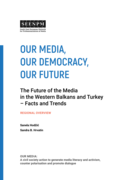
"The state of the media and democracy in Turkey faces critical challenges that hinder freedom of expression and pluralism, due to restrictive legal frameworks, economic instability, and cross-ownership in the media sector. Although digitalization has transformed news consumption, the government’s
...
control over online platforms increases concerns about censorship and reinforces practices of self-censorship. Public trust in the media continues to decline, driven by perceptions of political influence and biased reporting. Similarly, democracy is plagued with issues, as global rankings point to decline in Turkish democracy, while concerns about judicial independence persist. While elections with high voter turnout do occur, this may only be interpreted as a pattern of practicing democracy rather than a sign of democratic strength. Urgent and comprehensive reforms are needed to ensure judicial independence, create a pluralistic media environment, increase transparency, and protect press freedom." (Executive summary)
more
"Alongside the rise of new technologies and the evolving global conditions in the media industry, journalism and media in Serbia will face numerous challenges, particularly in the areas of basic media freedom and journalist protection, based on the findings of this research:
• There is no reliable
...
data on the number of journalists in Serbia, or how many of them are women or members of marginalized groups.
• Media ownership in Serbia is highly concentrated, particularly in the television broadcasting sector, which affects media reporting. Channels with national frequencies often align their narratives with the government’s or ruling party’s agenda.
• The state and ruling party demonstrate tendencies to control the media. This is evident in the newly updated law that allows business companies engaged in electronic communications, such as the state-owned Telekom, to own media outlets. Additionally, findings indicate that some media owners at the local level are connected to the ruling party.
• Media financing is often misused to encourage biased reporting. Public calls for funding are corrupted by GONGO media organizations, which prioritize funding pro-government outlets; state advertising is not regulated by law, and the media community was left out of the discussion on new advertising laws; despite receiving the majority of its budget from citizens’ subscriptions, the national public broadcaster RTS is still perceived as one of the most progovernment outlets in the country; foreign donors, including the EU, US and UK, provide significant financial support for media projects in Serbia, but there is no transparent data on the total amount of money donated.
• National minorities are represented through media outlets funded by National Councils of National Minorities. However, journalists from some of these media outlets work under political pressures and engage in self-censorship. National minorities living in the northern province of Serbia, Vojvodina, are also served by the provincial public broadcaster RTV. RTS does not provide content in the languages of the Bosnian, Vlach and Bulgarian communities in Serbia’s eastern and western regions. Romani and Albanian communities are represented on RTS, but the amount of content is minimal.
• Television is the most commonly used source of news and information, with citizens watching up to eight hours of television daily. The most-watched TV news programmes are central-informative political shows on channels with national frequencies, which are widely considered pro-government.
• Only 30% of Serbian citizens trust the media. Social media is the least trusted media type, while television is the most trusted." (Executive summary)
more
"The following conclusions can be drawn from the data analysis:
• The socio-economic status of journalists should be continuously advanced via improvement of working conditions in newsrooms and greater acknowledgement of labour rights on the part of media owners and the state.
• Rapid technologi
...
cal and information changes impose the need for adapting the ethical and professional standards to the new digital environment, as well as creating specific guidelines for the media and journalists in terms of the use of artificial intelligence.
• The interest of young people in studies in journalism, communications, and media is drastically decreasing due to the weak link between studies with the labour market, the poor economic situation in media, and the inherent risks to this profession. It is necessary to modernize the study programmes and curricula which should be in line with the newly emerging environment, as well as making it possible to interlink with the media industry.
• Disinformation and non-compliance with ethical standards are often evident in online media, thus there is already a wide discussion in the media community about the legal definition of the status and functioning of the online media.
• Ownership transparency in broadcast media is at a high level, which is not the case in internet media, as the latter are outside the legal scope. The legal solution for pluralism in media ownership does not correspond to the new digital environment, therefore changes are needed that will enable development of the media market and industry consolidation.
• Funds from the state budget for paid political advertising during elections and public interest campaigns have increased in recent years and represent a significant source of funding for many media outlets. The above increases media dependence on state funds, as well as the possibility of corruption and media clientelism.
• Professional media organizations and the civil sector support the idea of establishing a fund for the development of media pluralism, to serve as an independent mechanism for developing projects and contents of public interest. Such approach will encourage diversity, quality, and independence in the media industry.
• In the media landscape, there are not enough media and/or programmes that represent ethnic groups, marginalized groups, and persons with disabilities, while non-profit media is one of the most underdeveloped segments therein. Trust in institutions, including in the media, is very low, due to the high level of systemic corruption, disinformation, non-transparency, and weak effectiveness of institutions.
• Media literacy is included in formal education as a systemic approach to teaching, but awareness of its importance should be promoted more among all age groups and segments of society.
• Transparent and efficient policies, comprehensive analyses, and overarching strategies are needed to cover all segments of the media market, including the digital sphere. The limited media market adversely affects the economic situation of the media, resulting in a lack of evident development of pluralism, diversity, and independence of the media in the audiovisual media sphere." (Executive summary, pages 4-5)
more
"Since the change of the long-standing DPS government in mid-2020, Montenegrin society has faced political crises. Frequent election cycles and instability in ruling majorities have affected the speed and quality of Montenegro’s integration into the EU, the work and functioning of institutions, an
...
d the general social and political environment. After the reconstruction of Montenegro’s 44th government, anti-democratic and anti-European tendencies emerged. These tendencies are reflected in the advocacy for legislation aimed at changing the constitutional order regarding language and citizenship, suppressing criticism from the civil sector, and undermining relations with neighbouring Croatia, an EU member state. This has been accompanied by a decline in trust in key political institutions and an overall unsatisfactory political culture.
Although several international studies monitoring the state of democracy, the rule of law, corruption perception, and media freedoms show progress compared to previous years, the current situation in media and journalism is not encouraging. In recent years, institutions have attempted to strategically address the media sector through the adoption of a Media Strategy and amendments to media laws. However, these regulations have not adequately addressed some of the key issues affecting the media landscape, such as media ownership transparency, strong foreign influence in media ownership structures, unregistered portals, and the fight against disinformation. Additionally, they have not implemented new European regulations in this area, indicating that media laws will need to be revised again.
The significant increase in the number of media outlets in Montenegro has not led to greater media pluralism or improved journalistic standards. The media market is small, and the launch of new outlets lacks economic justification. The media scene is heavily influenced by foreign actors, predominantly from Serbia. Owners from Serbia control four out of five television stations with national frequency, and two out of three daily newspapers are foreign-owned. These media outlets inevitably influence public opinion and are used to expand political influence, which affects the quality of media reporting and threatens the survival of locally owned media outlets.
Year after year, the amount of public funds allocated to media outlets through the Media Pluralism Fund has increased, which is important for their sustainability. The Agency for Electronic Media and the Ministry of Culture and Media distribute the funds transparently, but mechanisms for evaluating the quality of financed projects need to be established.
The national regulator, the Agency for Electronic Media, has improved its communication with the public. Recent amendments to the law have expanded its jurisdiction, enabling it to impose measures of varying intensity. While it remains responsible only for electronic media, there is clear potential for the agency to develop into an independent and professional regulator that consistently applies regulations.
Current self-regulatory mechanisms in Montenegro’s media sector are not effective, but there is potential for further development in the new amendments to the law. These amendments require media outlets to develop internal self-regulation if they wish to receive funds from the Media Pluralism Fund. Implementing this legal provision must be accompanied by raising awareness among media and journalists about the importance of strong self-regulation. This will help citizens recognize self-regulation as an independent authority capable of improving the quality of reporting and providing a reliable platform for submitting complaints." (Conclusions, pages 28-29)
more