
Filter
113
Featured
80
6
1
Topics
31
24
10
9
9
7
7
6
5
5
5
5
5
4
4
4
4
4
4
4
4
4
4
3
3
3
3
3
3
3
2
2
2
2
2
2
2
2
2
2
2
2
2
2
2
2
2
2
2
2
2
2
2
1
1
1
1
1
1
1
1
1
1
1
1
1
1
1
1
1
1
1
1
1
1
1
1
1
1
1
1
1
1
1
1
1
1
1
1
1
1
1
1
1
1
1
1
1
1
1
1
1
1
1
1
1
1
1
1
1
1
1
1
1
1
1
1
1
1
1
1
1
1
1
1
1
1
1
1
1
1
1
1
1
1
1
1
1
Language
Document type
33
23
8
4
3
2
1
1
1
1
Countries / Regions
Authors & Publishers
Media focus
Publication Years
Methods applied
Journals
Output Type
Media Practice in Iraq
Basingstoke, Hampshire: Palgrave Macmillan (2012), xi, 221 pp.
"A historical survey of the Iraqi media from its beginning up to the present day, focusing on the post-2003 media scene and the political and societal divisions that occurred in Iraq after US-led occupation. Investigates the nature of the media outlets and offers an analysis of the way Iraqi satelli
...

"This paper documents the effect of Serbian public radio on the voting behavior and nationalistic anti-Serbian sentiment of Croats in Eastern Slavonia, Baranja and Western Srijem, a post-conflict region of modern Croatia on the border with Serbia. We find that the exposure to the Serbian public radi
...
Global Media Policy and Crisis States
In: The Handbook of Global Media and Communication Policy
Malden, Mass.: Wiley Blackwell (2011), pp. 180-191
Iraq’s News Media After Saddam: Liberation, Repression, and Future Prospects
Washington, DC: Center for International Media Assistance (CIMA) (2011), 46 pp.

The Media of Somalia: A Force for Moderation?
London: BBC World Service Trust (2011), 12 pp.

Afghanistan Media Assessment: Opportunities and Challenges for Peacebuilding
Washington, DC: United States Institute of Peace (USIP) (2010), 40 pp.
"[...] International donor support for Afghanistan's media has had two primary goals. The short-term goal has been to counteract the effects of insurgent communications in order to win the hearts and minds of the Afghan people. The long-term goal has been to create a free and independent media secto
...

"After the fall of Baghdad on April 9, 2003, Iraq's news media environment transformed almost overnight from the tightly controlled propaganda arm of Saddam Hussein's rule into one of the most diverse and unrestricted news environments in the Middle East. Built in an atmosphere of chaos and conflict
...
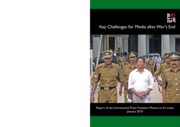
Forces of Gatekeeping and Journalists' Perceptions of Physical Danger in Post-Saddam Hussein's Iraq
Journalism & Mass Communication Quarterly, volume 87, issue 3-4 (2010), pp. 484-500
"Iraqi journalists operate in one of the deadliest newsgathering environments in the world. This study, based on a survey of 404 Iraqi journalists, examines the variables influencing journalists' perceptions of physical danger in covering news after the fall of Saddam Hussein. Gatekeeping theory pro
...
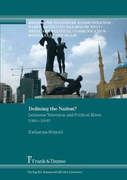
Defining the Nation? Lebanese Television and Political Elites, 1990-2005
Berlin: Frank & Timme (2009), 346 + xxvi pp.
"Katharina Nötzold explores whether and how mass media can contribute to nation-building after civil war. Drawing on the example of Lebanon s audiovisual media organisations, which are mostly privately owned by politicians, she demonstrates how political elites use television to transmit their visi
...
Media Discourse and the Yugoslav Conflicts: Representations of Self and Other
Farnham, England; Burlington, VT: Ashgate (2009), xii, 270 pp.

Rebel Voices and Radio Actors: In Pursuit of Dialogue and Debate in Northern Uganda
Development in Practice, volume 19, issue 4-5 (2009), pp. 610-620
"The town of Gulu in northern Uganda stood still as the leader of a then 16-year-old insurgency against the government was heard live through a local government radio station. On 28 December 2002, Joseph Kony called in to Mega FM’s live debate talk show and was heard throughout northern Uganda. Th
...

Newspapers in Hargeysa: Freedom of Speech in Postconflict Somaliland
Afrika Spectrum, volume 43, issue 2 (2008), pp. 91-113
"This article discusses the role of newspapers in the ongoing democratisation process in Somaliland. It shows that, embedded in Somali culture and the recent history of the region, freedom of speech in Hargeysa, the capital of Somaliland, is cultivated by and in print media established after the civ
...
To Tell You the Truth: The Ethical Journalism Initiative
Key Guides
Brussels: International Federation of Journalists (IFJ) (2008), vi, 183 pp.
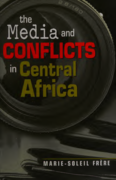
The Media and Conflicts in Central Africa
Deep Insights
Boulder, Colo.; London: Rienner; Panos Paris (2007), vii, 287 pp.
"This in-depth investigation of the role that local news media play in Central African conflicts combines theoretical analysis with case studies from nine African countries: Burundi, Cameroon, the Central African Republic, Chad, the Democratic Republic of Congo, Equatorial Guinea, Gabon, the Republi
...
Political Violence and Journalism in a Multiethnic State: A Case Study of Burma (Myanmar)
Journal of Communication Inquiry, volume 30, issue 4 (2006), pp. 354-373
"Debates about the role of media in situations of political violence call into question whether journalists should focus on “objective” reporting or instead facilitate conflict resolution. Yet an increasingly problematic assumption is that journalists are outsiders to the communities in conflict
...

Rwanda Mission Report
Copenhagen: International Media Support (IMS) (2005), 21 pp.
