
Filter
90
Breadcrumb:
Nordicom
Featured
89
8
Topics
27
11
9
7
7
6
5
5
5
5
4
4
4
3
3
3
3
3
3
3
3
3
3
3
3
3
3
3
3
2
2
2
2
2
2
2
2
2
2
2
2
2
2
2
2
2
2
2
2
2
2
2
2
2
2
2
2
2
2
2
2
2
1
1
1
1
1
1
1
1
1
1
1
1
1
1
1
1
1
1
1
1
1
1
1
1
1
1
1
1
1
1
1
1
1
1
1
1
1
1
1
1
1
1
1
1
1
1
1
1
1
1
1
1
1
1
1
1
1
1
1
1
1
1
1
1
1
1
1
1
1
1
1
1
1
1
1
1
1
1
1
1
1
1
1
1
1
1
1
1
1
1
1
1
1
1
1
1
1
1
1
1
1
1
1
1
1
1
1
1
1
1
1
1
1
1
1
1
1
1
1
1
1
1
1
1
1
1
1
1
1
1
1
1
1
1
1
1
1
Language
Document type
9
3
2
1
1
1
1
1
Countries
Authors & Publishers
Media focus
Publication Years
Methods applied
Output Type
Risk and Resilience among Journalists Covering Potentially Traumatic Events
In: The Assault on Journalism. Building Knowledge to Protect Freedom of Expression
Göteborg: Nordicom (2017), pp. 235-240
"Journalists covering crises are at high risk of experiencing potentially traumatic events. This chapter presents a study with 375 journalists who covered the 2011 terror attack in Norway. The purpose was to investigate whether social support (SS) was related to psychological distress (posttraumatic
...
Journalist Killings and the Responsibility to Report
In: The Assault on Journalism. Building Knowledge to Protect Freedom of Expression
Göteborg: Nordicom (2017), pp. 21-32
"More journalists are being killed and threatened around the world than at any time before. How do we account for these disturbing trends and why do journalists increasingly put themselves in harm’s way? This chapter argues that if we are to better understand the motivations of journalists and the
...
The Dangers of Sports Journalism
In: The Assault on Journalism. Building Knowledge to Protect Freedom of Expression
Göteborg: Nordicom (2017), pp. 205-220
"According to The Committee to Protect Journalists, 2 per cent of all journalists killed since 1992 worked on the sports beat. At present, however, we have limited knowledge of the specific dangers faced by sports journalists. This chapter presents findings from exploratory research on 78 reports of
...
Internal Threats and Safety of Journalists: A Study from India
In: The Assault on Journalism. Building Knowledge to Protect Freedom of Expression
Göteborg: Nordicom (2017), pp. 227-230
"Journalists face numerous threats from different stakeholders. In developing countries, internal threats coming from inside media organizations – threats that have a serious impact on the professional, economic and psychological lives of journalists – are less researched. This research is an at
...
Tribal Journalists under Fire: Threats, impunity and decision making in reporting on conflict in Pakistan
In: The Assault on Journalism. Building Knowledge to Protect Freedom of Expression
Göteborg: Nordicom (2017), pp. 147-158
"This study investigates the challenges faced by local journalists caught between the global “war on terror” and its local consequences in Pakistan’s Federally Administered Tribal Areas (FATA). Threats and impunity are commonplace in this buffer zone bordering Pakistan and Afghanistan, compell
...
How Unsafe Contexts and Overlapping Risks Influence Journalism Practice: Evidence from a survey of Mexican journalists
In: The Assault on Journalism. Building Knowledge to Protect Freedom of Expression
Göteborg: Nordicom (2017), pp. 303-318
"Journalists in many countries work in contexts of continuous risk, but few empirical studies identify how these conditions influence practice or measure the relative influence of different kinds of risk. This study asks a national sample of Mexican journalists to report use of several measures to a
...
A Story Bigger than Your Life? The safety challenges of journalists reporting on democratization conflicts
In: The Assault on Journalism. Building Knowledge to Protect Freedom of Expression
Göteborg: Nordicom (2017), pp. 289-302
"This chapter investigates safety challenges journalists face when reporting on democratization conflicts and their impact on journalistic work. It builds on a comparative case study within the EU-funded project “Media, Conflict and Democratisation” (MeCoDEM), which explores journalistic work pr
...
Journalism Schools Must Include Safety Courses in Curricula
In: The Assault on Journalism. Building Knowledge to Protect Freedom of Expression
Göteborg: Nordicom (2017), pp. 113-118
"Too many journalists are victims of violence and impunity, and more should be done in academia to prepare media students for the perils they are likely to face. I urge all faculty members at this conference to incorporate a course on safety for journalists in their curricula. It’s not a luxury; i
...

A Country without Mercy: Afghan Journalists Caught in Crossfires
In: The Assault on Journalism. Building Knowledge to Protect Freedom of Expression
Göteborg: Nordicom (2017), pp. 81-86
"In the last Afghan solar year (22 March 2015 – 21 March 2016), twelve journalists and media workers were killed, exceeding any previous year in recent history. In June 2016, the US photographer David Gilkey and his interpreter, journalist Zabihullah Tamanna, were killed in a Taliban attack in Maj
...
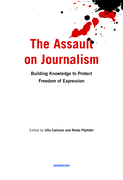
The Assault on Journalism. Building Knowledge to Protect Freedom of Expression
Deep Insights
Göteborg: Nordicom (2017), 363 pp.
"To support joint efforts to protect journalism, there is a growing need for research-based knowledge. Acknowledging this need, the aim of this publication is to highlight and fuel journalist safety as a field of research, to encourage worldwide participation, as well as to inspire further dialogues
...
Embedded Journalism and Its Implications in the Field
In: The Assault on Journalism. Building Knowledge to Protect Freedom of Expression
Göteborg: Nordicom (2017), pp. 255-266
"The Iraq War was a landmark in war reporting. The design and implementation of the embedded system enabled nearly 700 journalists to live and work alongside soldiers of the United States and British armies. Nearly 30 countries took part in the system, including Spain, one of the main supporters of
...

Ad Wars: Digital Challenges for Ad-Financed News Media in the Nordic Countries
Göteborg: Nordicom (2017), 229 pp.
"The accelerating digitalisation of the media landscape has released enormous forces of change in the Nordic advertising markets. The overall impression from the results of this study is that the sweeping changes digitalisation is bringing about are not just undermining the business model on which t
...
The Psychological Wellbeing of Iranian Journalists
In: The Assault on Journalism. Building Knowledge to Protect Freedom of Expression
Göteborg: Nordicom (2017), pp. 185-190
"Objectives: To determine the emotional wellbeing of journalists who work in Iran. Methods: A website was established and journalists in newsrooms in Iran and the Diaspora were given information to access the site. Responses were received from 114 journalists (76 per per cent cent). The mean age was
...
The Assault on Journalism. Building Knowledge to Protect Freedom of Expression: Words of Introduction
In: The Assault on Journalism. Building Knowledge to Protect Freedom of Expression
Göteborg: Nordicom (2017), pp. 11-20
"People who exercise their right to freedom of expression through journalism should be able to practice their work without restrictions. They are, nonetheless, the constant targets of violence and threats. In an era of globalization and digitization, no single party can alone carry the responsibilit
...
How journalists survived to report: Professionalism and risk management in the reporting of terror groups and violent extremism in North East Nigeria
In: The Assault on Journalism. Building Knowledge to Protect Freedom of Expression
Göteborg: Nordicom (2017), pp. 159-170
"The Boko Haram terrorism and violent extremism that ravaged North East Nigeria and Republics of Chad, Niger and Cameroons from 2009-2015 exposed weaknesses in the safety policy and protocols for local journalists in times and zones of tension in Nigeria. Boko Haram terrorists killed 30,000 people a
...
How Safe Is It? Being an activist citizen journalist in Turkey
In: The Assault on Journalism. Building Knowledge to Protect Freedom of Expression
Göteborg: Nordicom (2017), pp. 279-288
"This study discusses how and in what ways activist citizen journalists in Turkey develop safety tactics against the repressive strategies of a neoliberal authoritarian government. By drawing on the theories of alternative new media and citizen journalism, we conducted interviews with activist citiz
...
Foreign correspondents and local journalists: A key newsgathering partnership, for safety and for the global public good
In: The Assault on Journalism. Building Knowledge to Protect Freedom of Expression
Göteborg: Nordicom (2017), pp. 319-322
"Both long-standing and innovative partnership models suggest that collaborative newsgathering by international and local journalists has been an invaluable practice to get the news in unsafe environments and out to global audiences. As violence, often deadly and nearly always unpunished, multiplies
...
Why the World Became Concerned with Journalistic Safety, and Why the Issue Will Continue to Attract Attention
In: The Assault on Journalism. Building Knowledge to Protect Freedom of Expression
Göteborg: Nordicom (2017), pp. 33-44
"There is a history to why the challenge of securing safety for journalism has become a prominent issue in many parts of the world. This is partly because of increased attacks on journalists, but it is also a function of global developments that have afforded space for the issue to come to fore as a
...
The United Nations’ Role in Promoting the Safety of Journalists from 1945 to 2016
In: The Assault on Journalism. Building Knowledge to Protect Freedom of Expression
Göteborg: Nordicom (2017), pp. 45-60
"The United Nations (UN) has played an increasing role in promoting the safety of journalists. Yet little has been done to study its work from a historical perspective. This paper explores global attempts to promote journalist safety carried out by the UN system, from its inception in 1945 until 201
...
Explorations in an Emerging Research Field
In: The Assault on Journalism. Building Knowledge to Protect Freedom of Expression
Göteborg: Nordicom (2017), pp. 141-146
"When discussing the safety of journalists, it is quite natural that the focus is foremost on practitioners: those professional journalists, citizen journalists and other media workers who report about incidents, processes and their consequences from troubled sites around the world. Their accounts o
...
