
Filter
90
Breadcrumb:
Nordicom
Featured
89
8
Topics
27
11
9
7
7
6
5
5
5
5
4
4
4
3
3
3
3
3
3
3
3
3
3
3
3
3
3
3
3
2
2
2
2
2
2
2
2
2
2
2
2
2
2
2
2
2
2
2
2
2
2
2
2
2
2
2
2
2
2
2
2
2
1
1
1
1
1
1
1
1
1
1
1
1
1
1
1
1
1
1
1
1
1
1
1
1
1
1
1
1
1
1
1
1
1
1
1
1
1
1
1
1
1
1
1
1
1
1
1
1
1
1
1
1
1
1
1
1
1
1
1
1
1
1
1
1
1
1
1
1
1
1
1
1
1
1
1
1
1
1
1
1
1
1
1
1
1
1
1
1
1
1
1
1
1
1
1
1
1
1
1
1
1
1
1
1
1
1
1
1
1
1
1
1
1
1
1
1
1
1
1
1
1
1
1
1
1
1
1
1
1
1
1
1
1
1
1
1
1
Language
Document type
9
3
2
1
1
1
1
1
Countries
Authors & Publishers
Media focus
Publication Years
Methods applied
Output Type
Measuring journalism safety. Methodological challenges
In: The Assault on Journalism. Building Knowledge to Protect Freedom of Expression
Göteborg: Nordicom (2017), pp. 129-140
"The effectiveness of any measures taken to address the problems of journalism safety ultimately depends on our ability to understand the complex nature and dynamics of risk to journalists. Mapping the scale of the problem through the systematic collection of data on threats over time is therefore a
...
Violence against Indigenous Journalists in Colombia and Latin America
In: The Assault on Journalism. Building Knowledge to Protect Freedom of Expression
Göteborg: Nordicom (2017), pp. 191-204
"This chapter explores mechanisms and causes that put indigenous journalists at risk in Latin America. It seeks to explain the nature of “indigenous journalism” as well as the differences and similarities between “indigenous journalism” and the journalisms found in mainstream media in Latin
...
The Cost of Truth Telling in India: Reporting in the Context of Intolerance
In: The Assault on Journalism. Building Knowledge to Protect Freedom of Expression
Göteborg: Nordicom (2017), pp. 87-92
"I would like to begin by stating the obvious. Any way forward has to be based on a clear understanding of the possibilities for change in the environment and context of the press in India. While there is a lot to celebrate about the press in India, its institutional location within the market, its
...
The Protection of Citizen Journalists During Armed Conflicts
In: The Assault on Journalism. Building Knowledge to Protect Freedom of Expression
Göteborg: Nordicom (2017), pp. 267-278
"Digital technologies are changing the way in which journalism is performed. Today, reports by citizen journalists (CJs) are extremely relevant when traditional journalists cannot access hostile and dangerous areas. According to the Committee to Protect Journalists, 90% of murdered reporters were lo
...
Collaboration is the future: Doing research in the network era
In: The Assault on Journalism. Building Knowledge to Protect Freedom of Expression
Göteborg: Nordicom (2017), pp. 71-80
"The study of journalists’ safety around the world is one of the areas that clearly require international collaboration. This chapter highlights three distinct models of scientific collaboration: the centralized, the correspondent, and the coordinated cooperation model. The Worlds of Journalism St
...
Safety concerns in the Nigerian media: What gender dynamics?
In: The Assault on Journalism. Building Knowledge to Protect Freedom of Expression
Göteborg: Nordicom (2017), pp. 171-184
"This chapter focuses on gender dynamics in media safety in Nigeria. It critically examines the safety challenges journalists in Nigeria face in executing their duties in a country that has experienced different forms of conflicts, ranging from political instability, organized crime, terrorism, and
...
What’s Wrong with War Journalism? Why and how legal aspects of conflicts need better reporting
In: The Assault on Journalism. Building Knowledge to Protect Freedom of Expression
Göteborg: Nordicom (2017), pp. 241-254
"This chapter deals with whether war journalism in mainstream media is fit to take a fourth estate role in reporting the new wars, from the end of the Cold War in 1989 to the present war against the so-called Islamic State. In particular, it is a critical study of shortcomings when it comes to provi
...
UNESCO’s Research Agenda on the Safety of Journalists: Call for new academic research initiatives
In: The Assault on Journalism. Building Knowledge to Protect Freedom of Expression
Göteborg: Nordicom (2017), pp. 103-108
"Within this global context, UNESCO is the UN agency with the mandate to advance “the mutual knowledge and understanding of peoples, through all means of mass communication” and to promote “the free flow of ideas by word and image”. UNESCO has defined press freedom as designating the conditi
...
Setting a New Research Agenda: The establishment of a journalism safety research network
In: The Assault on Journalism. Building Knowledge to Protect Freedom of Expression
Göteborg: Nordicom (2017), pp. 109-112
"At a UNESCO research conference on the safety of journalists during the celebrations of World Press Freedom Day in Helsinki, Finland on 3 and 4 May 2016, UNESCO declared “that the Safety of Journalists paved the way for academic research cooperation”. To advance such cooperation the Centre for
...
When and How Does Voice Matter? And How Do We Know?
In: Voice & Matter: Communication, Development and the Cultural Return
Göteborg: Nordicom (2016), pp. 117-128
"This chapter seeks to complicate our understanding of voice in development. It proposes that while it is important to consider not just voice, and the processes of valuing voice, it is also important to understand what voice and agency mean in the complexities of everyday life for populations who a
...
A History of Cultural Futures: ‘Televisual Sovereignty’ in Contemporary Australian Indigenous Media
In: Voice & Matter: Communication, Development and the Cultural Return
Göteborg: Nordicom (2016), pp. 173-187
"When the Aboriginal Programs Unit of Australia’s ABC television began in 1988, every Indigenous person involved was a trainee under the direction of a Euro-Australian professional. They bore the burden of collective selfrepresentation in a televisual wasteland virtually devoid of Indigenous voice
...
The (Un)safe Practice of Journalism: An Analysis Based on UNESCO’s Journalists’ Safety Indicators Assessments
In: Freedom of Expression and Media in Transition: Studies and Reflections in the Digital Age
Göteborg: Nordicom (2016), pp. 103-107
"Journalists around the world are being killed and threatened for doing their work. This is a serious hindrance to freedom of expression and the safe practice of journalism. UN and UNESCO have led the process to create the UN Plan of Action on the Safety of Journalists and the Issue of Impunity to i
...
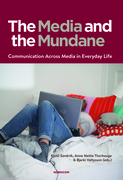
The Media and the Mundane: Communication Across Media in Everyday Life
Göteborg: Nordicom (2016), 159 pp.
"This book provides a variety of cases and theoretical insights that touch upon communication across media in everyday life. The cases favour user perspectives and are focused on coordinating mundane activities on smartphones, the role played by apps when exercising, the use of self-organised Facebo
...
Blurring the Lines: Market-Driven and Democracy-Driven Freedom of Expression
Göteborg: Nordicom (2016), 206 pp.
"Blurring the Lines: Market-Driven and Democracy-Driven Freedom of Expression focuses on challenges from the market to free speech and how free speech can be protected, promoted and developed when lines between journalism and advertising are blurred. With contributions from 20 scholars in law, media
...
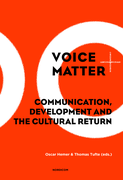
Voice & Matter: Communication, Development and the Cultural Return
Göteborg: Nordicom (2016), 266 pp.
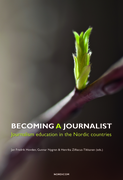
Becoming a Journalist: Jornalism Education in the Nordic Countries
Göteborg: Nordicom (2016), 334 pp.
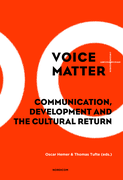
Save Us from Saviours: Disrupting Development Narratives of the Rescue and Uplift of the ‘Third World Woman’
In: Voice & Matter: Communication, Development and the Cultural Return
Göteborg: Nordicom (2016), pp. 139-154
"The images used to market development often feature women, as victims of terrible traditions and disempowering situations, or – more commonly these days – as enterprising agents of change, poised to ‘lift’ economies and their families and communities. These images tell a story of victims an
...
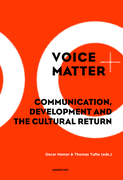
The Language and Voice of the Oppressed
In: Voice & Matter: Communication, Development and the Cultural Return
Göteborg: Nordicom (2016), pp. 43-58
"How should scholars approach study of the processes that characterize voice production among subaltern groups? The study builds on both Marxist and non-Marxist frameworks as theoretical trajectories for conducting class analyses that define how subaltern groups conceive, produce and consume their o
...
Africa’s Voices Versus Big Data? The Value of Citizen Engagement Through Interactive Radio
In: Voice & Matter: Communication, Development and the Cultural Return
Göteborg: Nordicom (2016), pp. 155-171
"We draw on insights from a two-year research project, Politics and Interactive Media in Africa (PiMA), and the related applied research pilot, Africa’s Voices, which worked with local radio stations in eight Sub-Saharan African countries. We examine the social and political significance of new op
...
