
Filter
35
Breadcrumb:
Pöyhtäri, Reeta
Featured
35
1
Topics
24
9
4
3
3
3
2
2
2
2
2
2
2
1
1
1
1
1
1
1
1
1
1
1
1
1
1
1
1
1
1
1
1
1
1
1
1
1
1
1
Language
Countries
Authors & Publishers
Media focus
Publication Years
Methods applied
Journals
Output Type
Foreign correspondents and local journalists: A key newsgathering partnership, for safety and for the global public good
In: The Assault on Journalism. Building Knowledge to Protect Freedom of Expression
Göteborg: Nordicom (2017), pp. 319-322
"Both long-standing and innovative partnership models suggest that collaborative newsgathering by international and local journalists has been an invaluable practice to get the news in unsafe environments and out to global audiences. As violence, often deadly and nearly always unpunished, multiplies
...
How Safe Is It? Being an activist citizen journalist in Turkey
In: The Assault on Journalism. Building Knowledge to Protect Freedom of Expression
Göteborg: Nordicom (2017), pp. 279-288
"This study discusses how and in what ways activist citizen journalists in Turkey develop safety tactics against the repressive strategies of a neoliberal authoritarian government. By drawing on the theories of alternative new media and citizen journalism, we conducted interviews with activist citiz
...
How Unsafe Contexts and Overlapping Risks Influence Journalism Practice: Evidence from a survey of Mexican journalists
In: The Assault on Journalism. Building Knowledge to Protect Freedom of Expression
Göteborg: Nordicom (2017), pp. 303-318
"Journalists in many countries work in contexts of continuous risk, but few empirical studies identify how these conditions influence practice or measure the relative influence of different kinds of risk. This study asks a national sample of Mexican journalists to report use of several measures to a
...
Journalist Killings and the Responsibility to Report
In: The Assault on Journalism. Building Knowledge to Protect Freedom of Expression
Göteborg: Nordicom (2017), pp. 21-32
"More journalists are being killed and threatened around the world than at any time before. How do we account for these disturbing trends and why do journalists increasingly put themselves in harm’s way? This chapter argues that if we are to better understand the motivations of journalists and the
...
Freedom under Pressure: Threats to journalists’ safety in Pakistan
In: The Assault on Journalism. Building Knowledge to Protect Freedom of Expression
Göteborg: Nordicom (2017), pp. 323-328
"This study aims to explore the level of journalists’ safety and investigates different types of threats that affect their work (actions) within the context (environment) of Pakistan. Drawing on the new institutionalism theory, this study posits that Pakistani journalists work in an unsafe institu
...
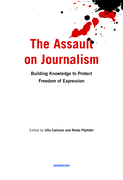
The Assault on Journalism. Building Knowledge to Protect Freedom of Expression
Deep Insights
Göteborg: Nordicom (2017), 363 pp.
"To support joint efforts to protect journalism, there is a growing need for research-based knowledge. Acknowledging this need, the aim of this publication is to highlight and fuel journalist safety as a field of research, to encourage worldwide participation, as well as to inspire further dialogues
...
Gendering War and Peace Journalism: New challenges for media research
In: The Assault on Journalism. Building Knowledge to Protect Freedom of Expression
Göteborg: Nordicom (2017), pp. 61-70
"The article addresses in what way gender matters when dealing with war – and peace journalism. Issues discussed are to what extent the experiences of male and female reporters differ when they cover stories from the front line, especially regarding safety and working conditions. One important que
...
Tribal Journalists under Fire: Threats, impunity and decision making in reporting on conflict in Pakistan
In: The Assault on Journalism. Building Knowledge to Protect Freedom of Expression
Göteborg: Nordicom (2017), pp. 147-158
"This study investigates the challenges faced by local journalists caught between the global “war on terror” and its local consequences in Pakistan’s Federally Administered Tribal Areas (FATA). Threats and impunity are commonplace in this buffer zone bordering Pakistan and Afghanistan, compell
...

A Country without Mercy: Afghan Journalists Caught in Crossfires
In: The Assault on Journalism. Building Knowledge to Protect Freedom of Expression
Göteborg: Nordicom (2017), pp. 81-86
"In the last Afghan solar year (22 March 2015 – 21 March 2016), twelve journalists and media workers were killed, exceeding any previous year in recent history. In June 2016, the US photographer David Gilkey and his interpreter, journalist Zabihullah Tamanna, were killed in a Taliban attack in Maj
...
How journalists survived to report: Professionalism and risk management in the reporting of terror groups and violent extremism in North East Nigeria
In: The Assault on Journalism. Building Knowledge to Protect Freedom of Expression
Göteborg: Nordicom (2017), pp. 159-170
"The Boko Haram terrorism and violent extremism that ravaged North East Nigeria and Republics of Chad, Niger and Cameroons from 2009-2015 exposed weaknesses in the safety policy and protocols for local journalists in times and zones of tension in Nigeria. Boko Haram terrorists killed 30,000 people a
...
Safety concerns in the Nigerian media: What gender dynamics?
In: The Assault on Journalism. Building Knowledge to Protect Freedom of Expression
Göteborg: Nordicom (2017), pp. 171-184
"This chapter focuses on gender dynamics in media safety in Nigeria. It critically examines the safety challenges journalists in Nigeria face in executing their duties in a country that has experienced different forms of conflicts, ranging from political instability, organized crime, terrorism, and
...
What’s Wrong with War Journalism? Why and how legal aspects of conflicts need better reporting
In: The Assault on Journalism. Building Knowledge to Protect Freedom of Expression
Göteborg: Nordicom (2017), pp. 241-254
"This chapter deals with whether war journalism in mainstream media is fit to take a fourth estate role in reporting the new wars, from the end of the Cold War in 1989 to the present war against the so-called Islamic State. In particular, it is a critical study of shortcomings when it comes to provi
...
Violence against Indigenous Journalists in Colombia and Latin America
In: The Assault on Journalism. Building Knowledge to Protect Freedom of Expression
Göteborg: Nordicom (2017), pp. 191-204
"This chapter explores mechanisms and causes that put indigenous journalists at risk in Latin America. It seeks to explain the nature of “indigenous journalism” as well as the differences and similarities between “indigenous journalism” and the journalisms found in mainstream media in Latin
...
The Psychological Wellbeing of Iranian Journalists
In: The Assault on Journalism. Building Knowledge to Protect Freedom of Expression
Göteborg: Nordicom (2017), pp. 185-190
"Objectives: To determine the emotional wellbeing of journalists who work in Iran. Methods: A website was established and journalists in newsrooms in Iran and the Diaspora were given information to access the site. Responses were received from 114 journalists (76 per per cent cent). The mean age was
...
The (Un)safe Practice of Journalism: An Analysis Based on UNESCO’s Journalists’ Safety Indicators Assessments
In: Freedom of Expression and Media in Transition: Studies and Reflections in the Digital Age
Göteborg: Nordicom (2016), pp. 103-107
"Journalists around the world are being killed and threatened for doing their work. This is a serious hindrance to freedom of expression and the safe practice of journalism. UN and UNESCO have led the process to create the UN Plan of Action on the Safety of Journalists and the Issue of Impunity to i
...
