
Filter
104
Breadcrumb:
Reporters Without Borders
Featured
101
1
2
Topics
26
19
18
11
10
10
9
8
7
7
6
6
6
6
6
4
4
4
3
3
3
2
2
2
2
2
2
2
2
2
2
2
2
1
1
1
1
1
1
1
1
1
1
1
1
1
1
1
1
1
1
1
1
1
1
1
1
1
1
1
1
1
1
1
1
1
1
1
1
1
1
1
1
1
1
1
1
1
1
1
1
1
1
1
1
Language
Document type
33
10
8
5
3
1
1
1
Countries
Authors & Publishers
Media focus
Publication Years
Methods applied
Output Type
Women's Rights: Forbidden Subject
Paris: Reporters Without Borders (2018), 31 pp.
"Covering women’s issues does not come without danger. A female editor was murdered for denouncing a sexist policy. A reporter was imprisoned for interviewing a rape victim. A woman reporter was physically attacked for defending access to tampons, while a female blogger was threatened online for c
...
Media Ownership Monitor Tanzania
Reporters Without Borders; Media Council of Tanzania (2018), 739 pp.
"Only a few media companies have a predominant market position and thus a potentially high influence on public opinion in Tanzania. Whereas the regulatory framework should in theory safeguard media pluralism and prevent media concentration, it shows considerable gaps in practice. Moreover, the legal
...
Online Harassment of Journalists: Attack of the Trolls
Paris: Reporters Without Borders (2018), 36 pp.
"In a new report entitled “Online harassment of journalists: the trolls attack,” Reporters Without Borders (RSF) sheds light on the latest danger for journalists – threats and insults on social networks that are designed to intimidate them into silence. The sources of these threats and insults
...
Media Ownership Monitor Sri Lanka
Reporters Without Borders; Verité Research (2018), 825 pp.
"Viewership, listenership and readership in the Sri Lankan media market is highly concentrated among a few media owners, many of whom have political affiliations. Limited access to ownership information and a number of regulatory shortcomings pose a further threat to media pluralism in the country."
...
Mission So Possible: Investigative Journalism in Bulgaria
Paris: Reporters Without Borders (2018), 5 pp.
"For a motivated journalist in Bulgaria it is easy to detect, investigate and collect proof of corruption and abuse of power. But currently, when making their findings public, instead of a gratifying applause, journalists encounter great chances of hitting a wall of silence, facing authorities with
...
Media Ownership Monitor Lebanon
Reporters Without Borders; Samir Kassir Foundation (2018), 1323 pp.
"The seemingly buzzing Lebanese media market is, in fact, controlled by only a few highly politicized owners that are either directly affiliated with political parties or belong to Lebanese dynasties. Additional threats to media pluralism arise from clear editorial lines defined by politics, close t
...
Journalists: The Bête Noire of Organized Crime
Paris: Reporters Without Borders (2018), 47 pp.
Media Ownership Monitor Mexico
Reporters Without Borders; Centro Nacional de Comunicación Social (Cencos) (2018), 1547 pp.
"Mexico’s booming media industry is controlled by some of the richest businessmen on earth. While the sector grows at a rate three times that of the overall economy, an alarming concentration of media ownership goes hand in hand with the well-known lack of safety for Mexico’s journalists, many o
...
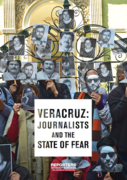
Veracruz: Journalists and the State of Fear
Paris: Reporters Without Borders (2017), 35 pp.
Media Ownership Monitor Brazil
Reporters Without Borders; Intervozes (2017), 925 pp.
"Power in Brazil means family business, both traditionally and to this very day. Dynasties of landowners known as “Colonels” extend their territorial claims to the airwaves, combining economic and political interests with tight control of public opinion. Neither digital technology and the rise o
...
Media Ownership Monitor Ghana
Reporters Without Borders; Media Foundation for West Africa (MFWA) (2017), 567 pp.
"The Media Ownership Monitor (MOM) reveals a high level of audience concentration in various media sectors. An almost maximum concentration was found among the printed press, where the top four media companies (Graphic Communications Group Limited, New Times Corporation, Western Publications Limited
...
Cambodia: The Independent Press in Ruins
Paris: Reporters Without Borders (2017), 26 pp.
Media Ownership Monitor Morocco
Reporters Without Borders; Le Desk (2017), 618 pp.
"Nine of the 36 media companies involved in Morocco’s most influential media are directly linked to the state, the government or the royal family. Four of them – SOREAD, SNRT, EcoMedias and Horizon Press – are among the most important media companies in terms of turnover and show the potential
...
Media Ownership Monitor Serbia
Reporters Without Borders (2017), 549 pp.
"The state has been for year the biggest advertiser in the country. Public money has been spent through its Ministries, institutions, republic agencies, bodies, local self-governments etc on different advertising and sponsorship contracts. The total value of state advertising still remains unknown d
...
"The Tunisian revolution has left a significant mark on the country’s media landscape, which diversified and played an important role in the transition process. Media diversity, however, does not guarantee the independence of information per se, especially if it remains to be dominated by politica
...
Media Ownership Monitor Philippines
Reporters Without Borders (2016), 699 pp.
"Two giant broadcast networks dominate the Philippine media industry both in terms of economic market power and audience reach, which gives them a major potential to shape public opinion. Despite a high number of media outlets and being described as one of the most freewheeling media systems in the
...
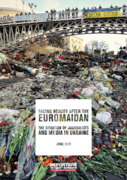
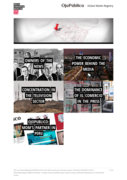
Media Ownership Monitor Peru
Reporters Without Borders (2016), 612 pp.
"High levels of revenue and ownership concentration in the media sector pose a threat to freedom of information in Peru. Concentration is also exceptionally high in terms of circulation and audience in the print and digital media sectors. MOM Peru, carried out from September and December 2016, has r
...
Media Ownership Monitor Mongolia
Reporters Without Borders (2016), 847 pp.
"Only one out of ten Mongolian media outlets is actively transparent about its ownership. A majority of them has political affiliations through their founders and / or owners. This limits the important role of media to act as an independent watchdog for democracy. These are some of the main findings
...
