
Filter
9
Breadcrumb:
Schneider, Nadja-Christina
Featured
2
Topics
4
1
1
1
1
1
1
1
1
1
1
1
1
1
1
1
1
1
1
1
1
1
1
1
1
1
1
1
1
1
1
1
1
Language
Document type
2
1
Countries
Authors & Publishers
Media focus
Publication Years
Journals
Output Type
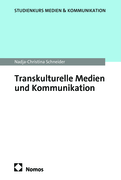
Transkulturelle Medien und Kommunikation
Baden-Baden: Nomos (2025), 169 pp.
"Ein zentraler Aspekt des Buches ist die Betrachtung der „kulturellen Folgen“ eines globalen Medienbooms und der zunehmenden Globalisierung von medienvermittelter Kommunikation seit den 1980er‑Jahren. Die Digitalisierung hat die Konvergenz von unterschiedlichsten Medien und Technologien beschl
...
New Practices of Self-Representation: The Use of Online Media by Ahmadiyya and Shia Communities in Indonesia and Malaysia
In: New Media Configurations and Socio-Cultural Dynamics in Asia and the Arab World
Baden-Baden; London: Nomos; Bloomsbury (2015), pp. 175-197
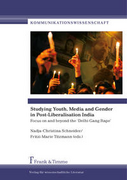
Studying Youth, Media and Gender in Post-Liberalisation India: Focus on and Beyond the "Delhi Gang Rape"
Berlin: Frank & Timme (2015), 217 pp.
"This volume aims to look both at as well as beyond the ‘Delhi Gang Rape’ through the lens of Indian Media Studies. The editors consider it a critical event, or rather critical media event that needs to be contextualized within a rapidly changing, diversifying and globalizing Indian society whic
...
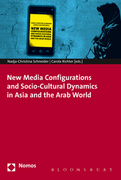
New Media Configurations and Socio-Cultural Dynamics in Asia and the Arab World
Baden-Baden; London: Nomos; Bloomsbury (2015), 372 pp.
"This book explores socio-cultural dynamics in Asia and the Arab world, embedding them into current processes of mediatisation. The book is based on the assumption that social and cultural changes never originate exclusively from the media or technological innovations, but rather depend on the chang
...
A Counter-Public of a Different Kind: Tajik Youth, Religious Authority and the Medialisation of Islam
In: New Media Configurations and Socio-Cultural Dynamics in Asia and the Arab World
Baden-Baden; London: Nomos; Bloomsbury (2015), pp. 149-173
Dakwah 2.0: Digital Dakwah, Street Dakwah and Cyber-Urban Activism Among Chinese Muslims in Malaysia and Indonesia
In: New Media Configurations and Socio-Cultural Dynamics in Asia and the Arab World
Baden-Baden; London: Nomos; Bloomsbury (2015), pp. 199-222
More Than a Belated Gutenberg Age: Daily Newspapers in India. An Overview of the Print Media Development Since the 1980s, Key Issues and Current Perspectives
Global Media Journal - German Edition, volume 3, issue 2 (2013), 25 pp.
"The Indian newspaper market still keeps growing and has attracted the interest of multinational corporations. One reason for this is that India is presently one of the largest markets for English-language newspapers and magazines in the world. Notwithstanding the continued growth of the English-lan
...
Social Dynamics 2.0: Researching Change in Times of Media Convergence: Case Studies from the Middle East and Asia
Berlin: Frank & Timme (2011), 166 pp.
"Mediated forms of communication increasingly influence the social relations and different spheres of life in the regions of South Asia, Southeast Asia and in the Arab-speaking region. In order to understand the profound social and political changes that go hand in hand with these medialisation proc
...
Die "revolutionäre" Expansion des indischen Zeitungssektors
Berlin: Südasien-Informationsnetz (2005), 50 pp.
"In vielen Ländern der Welt haben die Printmedien seit dem Siegeszug der audiovisuellen, elektronischen Medien, allen voran des Fernsehens, einen schweren Stand. Die Anzeigenmärkte sind so stark umkämpft wie nie zuvor und die Aufmerksamkeit des Publikums gilt als rar werdendes Gut. Anders verhäl
...
