
Filter
167
Featured
102
9
1
Topics
48
42
40
24
19
16
14
13
13
12
12
11
11
11
10
10
10
9
8
8
8
8
8
7
7
6
6
6
5
5
5
5
5
5
4
4
4
4
4
4
4
4
4
4
4
4
4
3
3
3
3
3
3
3
3
3
3
3
3
3
3
3
3
3
3
3
2
2
2
2
2
2
2
2
2
2
2
2
2
2
2
2
2
2
2
2
2
2
2
2
2
2
2
2
2
2
2
2
2
2
2
2
2
2
1
1
1
1
1
1
1
1
1
1
1
1
1
1
1
1
1
1
1
1
1
1
1
1
1
1
1
1
1
1
1
1
1
1
1
1
1
1
1
1
1
1
1
1
1
1
1
1
1
1
1
1
1
1
1
1
1
1
1
1
1
1
1
1
1
1
1
1
1
1
1
1
1
1
1
1
1
1
1
1
1
1
1
1
1
1
1
1
1
1
1
1
1
1
1
1
1
1
1
1
1
1
1
1
1
1
1
1
1
1
1
1
1
1
1
1
1
1
1
1
1
1
1
1
1
1
1
1
1
1
1
1
1
1
1
1
1
1
1
1
1
1
1
1
1
1
1
1
1
1
1
1
1
1
1
1
1
1
1
1
1
1
1
1
1
1
1
1
1
1
1
1
1
1
1
1
1
1
1
1
1
1
1
1
1
1
1
1
1
1
1
1
1
1
Language
Document type
81
13
12
3
3
3
3
2
1
1
1
1
Countries / Regions
Authors & Publishers
Media focus
Publication Years
Methods applied
Journals
Output Type
Freedom of Expression and the Media in Indonesia
London; Jakarta: Article 19; Aliansi Jurnalis Independen (AJI) (2005), 95 pp.
Freedom of Expression and the Media in Thailand
London; Bangkok: Article 19; Forum-Asia (2005), 126 pp.
Community-Based Networks and Innovative Technologies: New Models to Serve and Empower the Poor
New York: UNDP (2005), 183 pp.
Media Power in Europe: The Big Picture of Ownership
Brussels: European Federation of Journalists (EFJ); International Federation of Journalists (IFJ) (2005), 160 pp.
"This survey looks at the impact of media ownership developments in Europe. It finds that pluralism is under pressure and reveals that we do need some honest and critical thinking about how to answer searching questions. The global media are dominated by American media interests. If Europe is to joi
...
Africa's Media, Democracy and the Politics of Belonging
London; Pretoria: Zed Books; UNISA Press (2005), 308 pp.
South East Europe Media Handbook 2004/2005
Belgrade: South East Europe Media Organisation (SEEMO) (2005), 404 pp.

A Mapping Study of Media Concentration and Ownership in Ten European Countries
Hilversum (NL): Commissariaat voor de Media and David Ward (2004), 255 pp.
Who Owns the Media: Global Trends and Local Resistances
Penang: Southbound (2004), 330 pp.
South East Europe Media Handbook 2003/2004
Belgrade: South East Europe Media Organisation (SEEMO) (2004), 216 pp.
Incestos y blindajes: Radiografía del campo político - periodístico
La Paz: Plural Editores (2003), 337 pp.
European Media Ownership: Threats on the Landscape. A Survey of Who Owns What in Europe
Brussels: European Federation of Journalists (EFJ), updated ed. (2003), 49 pp.
"This report concludes that there are major threats in Europe’s media landscape. Some of the threats identified are political and private threats to public service broadcasting, power over global media in the hands of few, more and more media concentration, the threat to emerging markets in Easter
...
The Experience with Community Telecentres
Ottawa; Dakar: International Development Research Centre (IDRC); Council for the Development of Social Science Research in Africa (CODESRIA) (2003), 193 pp.
"Volume 2 examines the setting, operations, and effects of community telecentres. It describes the telecentre experiences of a variety of local and often rural communities, exploring the management structures and mechanisms that have been established to support these telecentres. The book provides p
...


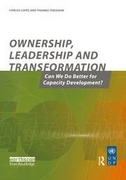
Ownership, Leadership and Transformation: Can We Do Better for Capacity Development?
New York: Earthscan (2003), 355 pp.
"The third and final in a series, this text bridges the conceptual foundations of capacity development and the difficulties and practical realities in the field. It demystifies the process of capacity development to make it more user-friendly. The book has two parts. The first shows how long-standin
...
Media and Democracy in Africa
Uppsala: Nordiska Afrikainstitutet (2002), 260 pp.
Who Owns the Media?
Washington, DC: World Bank (2002), 52 pp.
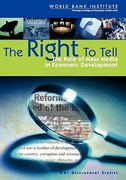
The Right to Tell: The Role of Mass Media in Economic Development
Deep Insights
Washington, DC: World Bank (2002), ix, 322 pp.
"Clearly as important providers of information, the media are more likely to promote better economic performance when they are more likely to satisfy three conditions: the media are independent, provide good-quality information, and have a broad reach. That is, when they reduce the natural asymmetry
...
