
Filter
35
Featured
21
1
Topics
7
7
5
5
3
3
3
3
3
2
2
2
2
2
2
2
2
1
1
1
1
1
1
1
1
1
1
1
1
1
1
1
1
1
1
1
1
1
1
1
1
1
1
1
1
1
1
1
1
1
1
1
1
1
1
1
1
1
1
1
1
1
1
1
1
1
1
1
1
1
1
1
1
1
1
1
1
1
1
1
1
1
1
1
1
1
1
1
1
1
1
1
1
1
1
1
1
1
1
1
1
1
1
1
1
1
1
1
1
1
1
1
1
1
1
1
1
1
1
1
Language
Document type
4
2
1
Countries / Regions
Authors & Publishers
Media focus
Publication Years
Methods applied
Journals
Output Type
Internet und Demokratie
Wien: Mandelbaum (2012), 124 pp.
Enquête exploratoire sur le web des Chinois d’outremer: Morphologie du web et production de la diaspora ?
Paris: Fondation Maison des Sciences de l’Homme (2012), 14 pp.
"Cette enquête exploratoire s’inscrit dans une interrogation sur la façon dont des collectifs dispersés créent des mondes qui leur sont propres, l’objectif ici étant de voir comment l’usage de l’Internet configure leurs espace et temps singuliers (leurs mondes propres). Les résultats i
...
Egyptian E-Diaspora: Migrant Websites Without a Network?
Paris: Fondation Maison des Sciences de l’Homme (2012), 19 pp.
"This article investigates the phenomenon of the Egyptian diaspora through an innovative approach based on the analysis of digital activity and the presence of Egyptian connected migrants. Following the methodology of the e-Diasporas project, we found a scarcely connected network of websites, with a
...
Cyber-Hindutva: Hindu Nationalism, the Diaspora and the Web
Paris: Fondation Maison des Sciences de l’Homme (2012), 27 pp.
"Hindu nationalists defend the advent of a Hindu state in India, while projecting the universal appeal of their ideology. Their very territorialised yet universal claims have been finding particular resonance among migrant populations, particularly in North America. This study strives to go beyond c
...
Nepalese Diasporic Websites, Signs and Conditions of a Diaspora in the Making?
Paris: Fondation Maison des Sciences de l’Homme (2012), 16 pp.
"Taking into account the performativity of the term “diaspora”, the author tries to understand how Nepalese diasporic websites are the sign and conditions of an “incipient diaspora”. Analysis of authoritative websites and links between different websites helps understand the structure of the
...
The Tunisian diaspora: Between “digital riots” and web activism
Paris: Fondation Maison des Sciences de l’Homme (2012), 21 pp.
"This article deals with the increasing connections among the Tunisian diaspora and its homeland provided by a widespread use of the social Web. The main aim is to evaluate to what extent the Tunisian diaspora has contributed to a wider diffusion of cyberactivism concerning legitimate claims for dem
...
The Post-Soviet Russian Media: Conflicting Signals
New York, NY: Routledge (2011), xv, 245 pp.

Diasporic Grief and Grievance On-Line: How South African and Serbian Diasporas Use the Web
Global Media Journal - African Edition, volume 4, issue 1 (2010), 19 pp.
"This paper explores the political and psychological angles of white South African and Serbian diasporas’ discourses on-line. On the basis of textual analysis of diasporic websites we argue that participants speak of ongoing grievance over the loss of their countries and assert that they have been
...
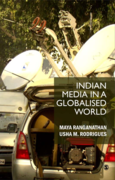
Indian Media in a Globalised World
New Delhi et al.: Sage (2010), xix, 275 pp.
"This book explores the transformation of Indian media in the context of two major developments: globalization, which has introduced what are termed as ‘foreign’ elements to Indian culture, and the opening of the floodgates for foreign media to enter the country. It discusses both theoretical co
...
Internationalizing Internet Studies: Beyond Anglophone Paradigms
New York; London: Routledge (2009), vii, 343 pp.
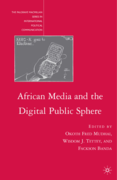
African Digital Media and the Public Sphere
New York; Basingstoke: Palgrave Macmillan (2009), xv, 260 pp.
"This book examines, from theoretical and empirical perspectives, the claims that new information and communication technologies (ICTs) are catalysts of democratic change in Africa. Contributors do so from optimist, pragmatist-realist, and pessimist stances through analyses of various forms of evide
...

Media and Identity in Africa
Bloomington: Indiana University Press (2009), xvii, 333 pp.
Medios de comunicación: El escenario iberoamericano
Madrid; Barcelona: Fundación Telefónica; Ariel (2007), 419 pp.
"En este informe se presenta unan visión de conjunto de los medios de comunicación en Latinoamérica que aparece como la suma de circunstancias nacionales complejas y diversas, muchas veces trazadas por desigualdades en las que cohabitan la riqueza y la pobreza, la inclusión y la exclusión, lo m
...
