Filter
114
Breadcrumb:
Reuters Institute for the Study of Journalism
Featured
110
5
Topics
17
16
16
12
8
7
7
6
5
5
4
4
4
4
4
4
4
3
3
3
3
3
3
3
3
3
3
3
3
3
3
3
2
2
2
2
2
2
2
2
2
2
2
2
2
2
2
2
2
2
2
2
2
2
2
2
2
2
2
1
1
1
1
1
1
1
1
1
1
1
1
1
1
1
1
1
1
1
1
1
1
1
1
1
1
1
1
1
1
1
1
1
1
1
1
1
1
1
1
1
1
1
1
1
1
1
1
1
1
1
1
1
1
1
1
1
1
1
1
1
1
1
1
1
1
1
1
1
1
1
1
1
1
1
1
1
1
1
1
1
1
1
1
1
1
1
1
1
1
1
1
1
1
1
1
1
1
1
1
1
1
1
1
1
1
1
1
1
1
1
1
1
1
1
1
1
1
1
1
1
1
1
1
1
Language
Document type
12
4
3
2
2
1
1
1
Countries
Authors & Publishers
Media focus
Publication Years
Methods applied
Output Type
A Central American Audience Opportunity: The U.S. Diaspora
Oxford: Reuters Institute for the Study of Journalism (2022), 32 pp.
"Advertising-based revenue strategies tend to create a tunnel vision within regional media outlets, distracting them from investing time and resources in innovation to explore other audience opportunities. Take the example of catering to the diaspora: what would happen if Prensa Libre (Guatemala), L
...
The Future is Feminist: Lessons from Journalists in Mexico and Argentina
Oxford: Reuters Institute for the Study of Journalism (2022), 22 pp.
"Journalists in Mexico and Argentina are working hard to revolutionise the way women are represented in the news media but the media industry itself needs to look at how it treats women in the newsroom. Monica Cole interviewed 15 journalists to chronicle the ways representation is changing, and the
...

‘There’s no Honour in Honour Killing’: The Paradox of Femicide in Palestinian Media
Oxford: Reuters Institute for the Study of Journalism (2022), 7 pp.
"The significance of our work became obvious to me in that courtroom. Stories of femicide do make headlines in Palestinian news, but rarely top the public agenda. If journalists made the same fuss every time a woman was attacked or murdered, would society look different? Why don't all women get the
...
Bridging Journalism’s Data Viz Accessibility Gap
Oxford: Reuters Institute for the Study of Journalism (2022), 28 pp.
"Making a visual format accessible for people who can’t see is challenging, but there’s a huge community already invested in working out viable solutions. The tension that remains for them is in receiving a clear mandate for this work from senior leaders within organisations. Accessibility champ
...

Reuters Institute Digital News Report 2022
Oxford: Reuters Institute for the Study of Journalism (2022), 161 pp.
"Trust in the news has fallen in almost half the countries in our survey, and risen in just seven, partly reversing the gains made at the height of the Coronavirus pandemic. On average, around four in ten of our total sample (42%) say they trust most news most of the time. Finland remains the countr
...
How Publishers Are Learning to Create and Distribute News on TikTok
Oxford: Reuters Institute for the Study of Journalism (2022), 35 pp.
"This report sets out data on the extent of publisher adoption alongside motivations for joining TikTok; pulls together top tips from TikTok creators and discuss the metrics most commonly used to evaluate success; explores different strategies for engaging users on the platform, highlighting case st
...
The Representation of Indigenous Sámi People in Norwegian Tabloids
Oxford: Reuters Institute for the Study of Journalism (2022), 17 pp.
"I wanted to investigate how much coverage Norway’s most-read tabloid media – Verdens Gang and Dagbladet – gives to the affairs of Sámi parliament, politics and identity. To do so, I reviewed archives dating back 20 years, and then consulted with leading Sámi journalists and the head of Sám
...
Snap Judgements: How Audiences Who Lack Trust in News Navigate Information on Digital Platforms
Oxford: Reuters Institute for the Study of Journalism (2022), 43 pp.
"In this report, we qualitatively examine how audiences who lack trust in most news organisations in their countries navigate the digital information environment, especially how they make sense of the news they encounter while using social media, messaging applications, or search engines. Drawing on
...
The Space Between: Opportunities and Insights from Spanish-Language Audio
Oxford: Reuters Institute for the Study of Journalism (2022), 24 pp.
"In this paper, I hope to outline key questions for radio broadcasters contemplating a podcasting strategy; capture key lessons from successful Spanish language audio outlets (Radio Ambulante and Prisa Audio); highlight key benefits and revenue opportunities a podcasting strategy can yield for news
...
Keeping Journalists Safe Online: A Guide for Newsrooms in West Africa & Beyond
Oxford: Reuters Institute for the Study of Journalism (2022), 27 pp.
"The guidelines contained here specify steps and measures that newsrooms and journalists in West Africa can take to mitigate the problem of online abuse. The purpose is not to shield journalists from criticism or promote the criminalization of online speech, but to deal with a real threat facing jou
...
How We Follow Climate Change: Climate News Use and Attitudes in Eight Countries
Oxford: Reuters Institute for the Study of Journalism (2022), 40 pp.
"In this report, we use online survey data collected in August and September 2022 to document and understand how people in eight countries - Brazil, France, Germany, India, Japan, Pakistan, the UK, and the USA - access news and information about climate change. A large majority of our respondents ac
...
A Guide to Improving the Accessibility of Indian News and Newsrooms
Oxford: Reuters Institute for the Study of Journalism (2022), 30 pp.
"I spoke to 14 journalists with disabilities in India who painted a vivid picture of the barriers they face to joining the industry, finding employment, and thriving in the workplace. And what affects these journalists translates into media products that reflect a lack of accessibility for our audie
...
How to Prepare for High-Risk Reporting Situation
Oxford: Reuters Institute for the Study of Journalism (2022), 26 pp.
Journalism, Media, and Technology Trends and Predictions 2022
Oxford: Reuters Institute for the Study of Journalism (2022), 46 pp.
"The report shows that 2022 will be a year of careful consolidation for a news industry that has been both disrupted and galvanised by the drawn-out COVID-19 crisis. Both journalists and audiences have, to some degree, been 'burnt out' by the relentless intensity of the news agenda, alongside increa
...
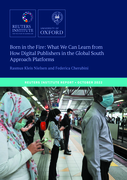
Born in the Fire: What We Can Learn from How Digital Publishers in the Global South Approach Platforms
Oxford: Reuters Institute for the Study of Journalism (2022), 33 pp.
"Based on interviews with a strategic sample of 11 publishers in eight low- and middle-income countries, the authors of this report analyse how various digital publishers across a range of Global South countries approach digital platforms: both big platform companies such as Google and Meta; rapidly
...
Listening to What Trust in News Means to Users: Qualitative Evidence from Four Countries
Oxford: Reuters Institute for the Study of Journalism (2021), 50 pp.
"This report examines how people in Brazil, India, the UK, and the US view news media in their countries, the factors they use when determining whether sources are trustworthy, and what ‘trust in news’ ultimately means to them [...] While we note throughout the report areas of difference between
...
Lessons in Environmental News Reporting from Brazil
Oxford: Reuters Institute for the Study of Journalism (2021), 26 pp.