Filter
84
Featured
62
3
Topics
16
14
11
9
9
8
7
7
6
6
4
4
4
3
3
3
3
3
3
3
3
3
3
3
3
3
3
3
2
2
2
2
2
2
2
2
2
2
2
2
2
2
2
2
2
2
2
1
1
1
1
1
1
1
1
1
1
1
1
1
1
1
1
1
1
1
1
1
1
1
1
1
1
1
1
1
1
1
1
1
1
1
1
1
1
1
1
1
1
1
1
1
1
1
1
1
1
1
1
1
1
1
1
1
1
1
1
1
1
1
1
1
1
1
1
1
1
1
1
1
1
1
1
1
1
1
1
1
Language
Document type
25
3
3
1
Countries / Regions
Authors & Publishers
Media focus
Publication Years
Methods applied
Journals
Output Type
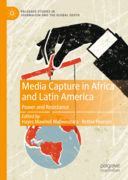
Media Capture in Africa and Latin America: Power and Resistance
Cham: Palgrave Macmillan (2025), xliii, 388 pp.
"How can current debates on ‘media capture’ be understood within the contexts of Africa and Latin America? This edited collection provides a nuanced exploration of media capture—a critical yet contested concept that examines and illuminates how media can become skewed in favour of power—whil
...
State capture of Romani ethnic media in Hungary
European Journal of Communication, volume 40, issue 1 (2025), pp. 23-36
"The portrayal of ethnic communities in the media can have a significant impact on the everyday life of these groups – both in a positive and negative way. Often, the dominant depictions in mainstream media are created without the community's involvement and are dominated by stereotypes. To deal w
...

Media Capture and Perspectives for Media Development in a Fragile Media System: Debating Journalistic Roles in Guinea-Bissau
Central European Journal of Communication, volume 2, issue 36 (2024), pp. 204-222
"Guinea-Bissau's media have negotiated their roles and freedoms within the postcolonial national construct since its official independence from Portugal in 1974. While the current media landscape is relatively pluralistic, journalists experience constraints from various sides: political pressures, u
...

Bulgarian Media Since 1989: From Instrumentalization to Capture
Central European Journal of Communication, volume 2, issue 36 (2024), pp. 185-203
"In the second decade of the 21st century, Bulgaria earned the unsavory reputation of having the least media freedom in the EU’s (Reporters Without Borders). This paper examines the current state of Bulgarian media based on two research concepts: for instrumentalization, respectively the capture o
...

Patronage Media in Post-Communist Mongolia
Central European Journal of Communication, volume 2, issue 36 (2024), pp. 247-267
"We provide a historically informed analysis of the media in post-communist Mongolia thirty years after the transition. In 1990, Mongolia chose a peaceful transition towards liberal democracy following the seventy years of the communist regime. Our analysis first establishes that amid the challenges
...

The Capture Effect: How Media Capture Affects Journalists, Markets and Audiences
Central European Journal of Communication, volume 2, issue 36 (2024), pp. 162-184
"As the literature aimed at defining and explaining media capture has grown in recent years so has the interest in documenting the impact of capture in greater depth. There is still a relatively wide gap between the literature focused on defining and describing the concept, which is rich and increas
...
Capturing News, Capturing Democracy: Trump and the Voice of America
New York: Oxford University Press (2024), viii, 294 pp.
"How did the Trump administration capture one of the world’s most important public service news networks? This book uses rare interviews and an analysis of private correspondence and internal documents to explain why and how Voice of America (VOA) became intensely politicized from 2020 to 2021. It
...
The Routledge Companion to Journalism in the Global South
London; New York: Routledge (2024), xxiv, 491 pp.
"Responding to mounting calls to decenter and decolonize journalism, The Routledge Companion to Journalism in the Global South examines not only the deep-seated challenges associated with the historical imposition of Western journalism standards on constituencies of the Global South but also the opp
...

Revisiting the Hierarchy of Influences on Journalism in a Transitional Context: When the Social System Level Prevails
International Journal of Communication, volume 18 (2024), pp. 3347-3365
"In this article, we use Shoemaker and Reese’s hierarchy of influences (HOI) model as a framework to investigate the ways in which Egyptian journalists perceive the influences exerted on them in the context of the post-Arab Spring transition. Our findings show that perceptions of limitations to jo
...
Media Capture and Journalism as Emotional Labor: How Do Media Professionals Manage Bureaucratic Violence in the Kurdistan Region of Iraq?
Journalism Studies, volume 24, issue 7 (2023), pp. 876-895
"This paper focuses on the (in)direct tools of governmental bureaucracy used to control journalistic work in the Kurdistan Region of Iraq (KRI). It calls for understanding media capture not only through structural-level consequences, but also through the methods used to create an environment of inst
...

Media Capture Strategies in an Islamic Authoritarian Context: The Case of the Taliban
Human Rights Institute (2023), 43 pp.
"This paper explores the Taliban government's media capture strategies since retaking the country on August 15, 2021, and how journalists and media outlets have responded to these strategies. In particular, it focuses on the Taliban government's approach to the media, given the recent political tran
...
Free to Hate: How Media Liberalization Enabled Right-Wing Populism in Post-1989 Bulgaria
Champaign: University of Illinois Press (2023), 391 pp.
"Martin Marinos applies a critical political economy approach to place Bulgarian right-wing populism within the structural transformation of the country’s media institutions. As Marinos shows, media concentration under Western giants like Westdeutsche Allgemeine Zeitung and News Corporation have l
...
Media Ownership in Africa in the Digital Age: Challenges, Continuity and Change
London; New York: Routledge (2023), xiv, 295 pp.
"Who owns the media and communications in Africa today and with what implications? The book elegantly answers this urgent question by unpacking multiple dimensions of media ownership through rare and authoritative perspectives, including both historical and contemporary digital developments. It trac
...
Investing in Facts: How the Business Community Can Support a Healthy Infosphere
Deep Insights
Washington, DC: Center for International Media Assistance (CIMA); Center for International Private Enterprise (CIPE) (2023), 33 pp.
"This report builds off research conducted in Czechia, Romania, and Serbia by an international team of media experts. The research aimed to identify inspiring and impactful ways that the private sector in these countries is engaging in efforts to counter disinformation and bolster independent journa
...
Journalism in the Grey Zone: Pluralism and Media Capture in Lebanon and Tunisia
Edinburgh: Edinburgh University Press (2023), ix, 228 pp.
"Lebanon and Tunisia are two of the freest countries in the Middle East and North Africa, but elites in both countries seek to manipulate media organisations and individual journalists to shore up support for themselves and attack opponents. This book explores the political role of journalism in the
...
Media Capture in Russia: An Expensive Venture. A Financial Analysis of Key Russian Media Companies
London: Media and Journalism Research Center (MJRC) (2023), 26 pp.
"Russia’s three media giants, Gazprom Media Holding, National Media Group, and VGTRK, are interconnected through an ownership structure where the state remains the primary beneficiary. Shareholding links and the Kremlin’s personal ties demonstrate how the Russian media landscape is captured thro
...