Filter
19
Featured
1
1
Topics
7
5
3
3
3
3
2
2
2
2
2
2
2
2
2
2
2
2
2
1
1
1
1
1
1
1
1
1
1
1
1
1
1
1
1
1
1
1
1
1
1
1
1
1
1
1
1
1
1
1
1
1
1
1
1
1
Language
Document type
2
1
1
1
1
Countries / Regions
Authors & Publishers
Media focus
Publication Years
Journals
Output Type

Can the Church Use Media Communication Channels? Inherent Features of Media Communication Channels Relative to Religious Messages in the Media
Central European Journal of Communication, volume 6, issue 1 (2013), pp. 66-89
"The present study is part of a complex research of media language to spread religious messages. It deals with the nature of the communication channel of the mass-media. It is based on the qulitative research carried out especially by means of the methods of focus groups and Delphi Techniques. Start
...
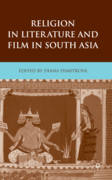
Religion in Literature and Film in South Asia
New York: Palgrave Macmillan (2010), xiv, 226 pp.
"This innovative, interdisciplinary collection of essays by scholars based in Europe and the United States offers stimulating approaches to the role played by religion in present-day South Asia." (Publisher description)
Lo sagrado y los medios de comunicación: Efímero y trascendente
Lima: Universidad Ruiz de Montoya (2009), 219 pp.
"Nuestro interés particular por analizar lo sagrado en los medios de comunicación no se refiere a encontrar "huellas" religiosas - cristianas o no - en actividades seculares mediáticas, sino a entender cómo desde los medios se construyen discursos que dan sentido a una nueva significación de sa
...
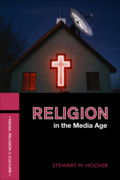
Religion in the Media Age
Abingdon: Routledge (2006), 341 pp.
"Looking at the everyday interaction of religion and media in our cultural lives, Hoover's new book is a fascinating assessment of the state of modern religion. Recent years have produced a marked turn away from institutionalized religions towards more autonomous, individual forms of the search for
...
Cine y espiritualidad: Metodología para la formación
Key Guides
Quito: Organización Católica Latinoamericana y Caribeña de Comunicación (OCLACC) (2006), 147 pp.
Handbuch Religion und Populäre Kultur
Stuttgart: Kohlhammer (2005), 374 pp.
Media Anthropology
Thousand Oaks: Sage (2005), 350 pp.
"Media Anthropology represents a convergence of issues and interests on anthropological approaches to the study of media. The purpose of this reader is to promote the identity of the field of study; identify its major concepts, methods, and bibliography; comment on the state of the art; and provide
...
Vom Non-Prophet-Unternehmen zu einer visionären Kirche: Verkündigung in der Mediengesellschaft
Würzburg: Echter (2002), 141 pp.
Zwischen Religion und Unterhaltung
Mainz: Matthias-Grünewald-Verlag (2001), 152 pp.
"Diese Studie geht den religiösen Aspekten nach, die in Musik und Showgeschäft, Fernsehserien und Starwelten, also in ganz verschiedenen Bereichen der Erlebnis- und Unterhaltungsgesellschaft aufzuspüren sind. Diese Spurensuche zeigt, dass es zu nicht-religiösen Aneignungen religiöser Traditione
...
Die Frohe Botschaft des Fernsehens: Kulturwissenschaftliche Untersuchung medialer Diesseitsreligion
Konstanz: UVK (2000), 277 pp.
"Verheißung, Vergebung, Verkündigung, Geborgenheit, Trost, Caritas und Magie haben, wenn auch in neuen Kleidern, ein neues Heim gefunden: nicht mehr (allein) in der Kirche sind sie ansässig, sondern (auch) im Fernsehstudio. Diese These wird im vorliegenden Essay aufgrund der Analyse solcher Sendu
...

Fernsehen als Mythos: Poetik eines narrativen Erkenntnissystems
Wiesbaden: Westdeutscher Verlag (1999), 347 pp.
"Die Autorin beschreibt die spezifische ästhetische Erscheinungsform des Fernsehens, die Vermittlungsstruktur seiner Inhalte, narrative Vermittlungsformen und seine kollektive mediale Wirkung. Dabei wird erstmals die Vielzahl der vorliegenden Publikationen zu Teilaspekten der Fernsehvermittlung in
...
Espelhos míticos da cultura de massa: Cinema, TV e quadrinhos na Índia
São Paulo: Annablume (1999), iii, 106 pp.
La búsqueda del misterio trascendente en los medios de masas
Caracas: Universidad Católica Andrés Bello (UCAB) (1999), xiii, 247 pp.
Medien - Ritual - Religion: Zur religiösen Funktion des Fernsehens
Frankfurt am Main: Suhrkamp (1998), 723 pp.
Rethinking Media, Religion, and Culture
Thousand Oaks; London; New Delhi: Sage (1997), x, 332 pp.
"The growing connections between media, culture and religion are increasingly evident in contemporary society, but until now have rarely been theoretically linked. The contributors to this volume effectively combine these areas into a coherent whole. The issues they examine include: the decline of r
...