
Filter
66
Featured
58
4
1
Topics
46
45
44
44
8
4
4
3
3
3
2
2
2
2
2
2
2
1
1
1
1
1
1
1
1
1
1
1
1
1
1
1
1
1
1
1
1
1
1
1
1
1
1
1
1
1
1
1
1
1
1
1
1
1
1
1
1
Language
Document type
44
1
1
1
Countries / Regions
Authors & Publishers
Media focus
Publication Years
Methods applied
Journals
Output Type
Determinants of watchdog journalism: A global empirical approach
International Communication Gazette, volume 87, issue 3 (2025), pp. 191-216
"This article introduces and examines a hierarchical model of influences that identifies the variables affecting the watchdog role of journalists at three levels: the societal (press freedom and democracy), the organizational (media ownership), and the individual (editorial autonomy and perceived in
...
Contemporary Contested Ethiopian Media Practice and Its Influence on Journalists’ Autonomy and Role
Journalism Practice, volume 19, issue 11 (2025), pp. 2549-2575
"This study explores contemporary journalists’ autonomy and role in the Ethiopian contested media practice by taking journalists working in Amhara Media Corporation (AMC). A qualitative research approach was used to collect data from journalists and admin staff. For triangulation, this study combi
...
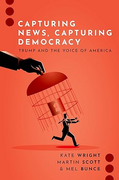
Capturing News, Capturing Democracy: Trump and the Voice of America
New York: Oxford University Press (2024), viii, 294 pp.
"How did the Trump administration capture one of the world’s most important public service news networks? This book uses rare interviews and an analysis of private correspondence and internal documents to explain why and how Voice of America (VOA) became intensely politicized from 2020 to 2021. It
...
Determinants of Journalists' Autonomy and Safety: Evidence from the Worlds of Journalism Study
Journalism Practice, volume 16, issue 8 (2022), pp. 1715-1735
"The present study is an attempt to examine how objective structural political forces and subjective perception of political influences determine journalists' autonomy and safety. The evidence is based on responses representing journalists from 65 countries, which adds to the cross-cultural robustne
...
The State of Innovation and Media Viability in East Africa: From Indepth Media House Surveys
Deep Insights
"The fact that about half of the news-producing media organizations categorise themselves as having insufficient newsroom resources as far as equipment, technology and training are concerned suggests that there is still need to look into equipping newsrooms technologically and continuing efforts to
...

The Politics of Impunity and the Shifting Media Landscape in Kenya
Athens Journal of Mass Media and Communications, volume 7, issue 1 (2021), pp. 61-78
"This article focuses on state-media relations and the shifts in the overall media landscape in Kenya. Drawing on a political economy approach to media operations in Kenya, it argues that while there are competing meanings over what constitutes "news values", "editorial independence", and "critical
...

Professional Autonomy and Structural Influences: Exploring How Homicides, Perceived Insecurity, Aggressions Against Journalists, and Inequalities Affect Perceived Journalistic Autonomy in Colombia
International Journal of Communication, volume 14 (2020), pp. 3054-3075
"Journalistic autonomy has been studied more frequently in countries with secure democracies in terms of journalists’ perceptions of freedom and independence to work in the midst of the controls, pressures, and influences perceived in the newsrooms. Based on objective variables and on a national s
...
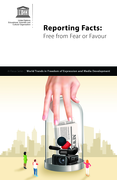
Reporting Facts: Free from Fear or Favour
Paris: UNESCO (2020), 52 pp.
"In a growing number of countries around the world, the greatest menace to editorial independence and professional standards is media capture, a form of media control achieved through a series of premeditated steps taken by governments and powerful interest groups, which undermines journalism as a p
...

Soft Power, Hard News: How Journalists at State-Funded Transnational Media Legitimize Their Work
International Journal of Press/Politics, volume 25, issue 4 (2020), pp. 607-631
"How do journalists working for different state-funded international news organizations legitimize their relationship to the governments which support them? In what circumstances might such journalists resist the diplomatic strategies of their funding states? We address these questions through a com
...
Tendances mondiales en matière de liberté des d’expression et de développement des médias. Rapport mondial 2017/2018
Deep Insights
Paris: UNESCO (2018), 200 pp.
"Nous observons ainsi des mutations profondes dans le champ de la liberté de la presse, qui progresse sur plusieurs points, mais recule également dans certains autres. La liberté des médias est notamment limitée par de nombreuses restrictions légales sur le droit de communiquer des information
...

Journalists in Brazil
Worlds of Journalism Study (2017), 6 pp.
"With regards to professional role orientations, Brazilian journalists found it most important to report things as they are, to promote tolerance and cultural diversity, to be a detached observer, to let people express their views, and to provide analysis of current affairs (see Table 1). These resu
...

Journalists in Turkey
Worlds of Journalism Study (2017), 6 pp.
"With regards to professional role orientations, journalists in Turkey believe that reporting things as they are and to be a detached observer are the most important aspects of their work. To provide analysis of current affairs, to let people express their views, to monitor and scrutinize political
...

Journalists in Egypt
Worlds of Journalism Study (2017), 5 pp.
"Egyptian journalists' most important role orientations are to be a detached observer, to report things as they are, to provide information people need to make political decisions, to let people express their views, to motivate people to participate in political activity, and to provide analysis for
...

Journalists in the UAE
Worlds of Journalism Study (2017), 5 pp.
"With regards to professional role orientations, journalists in the UAE found it most important to educate the audience, to influence public opinion, to promote tolerance and cultural diversity, to tell stories about the world, and to support government policy. Still, more than two out of five respo
...

Journalists in El Salvador
Worlds of Journalism Study (2017), 6 pp.
"With regards to professional role orientations, journalists in El Salvador found it most important to report things as they are, to monitor and scrutinize political leaders, to educate the audience, and to let people express their views. The relevance of these roles was fairly undisputed among the
...

Journalists in Colombia
Worlds of Journalism Study (2017), 6 pp.
"With regards to how Colombian journalists reportedly viewed their professional purpose/role, they found it was most important to report news accurately, to provide analysis of current affairs, to promote tolerance and cultural diversity, to promote social change, and lastly, to educate the audience
...

Journalists in Cyprus
Worlds of Journalism Study (2017), 5 pp.
"With regards to professional role orientations, Cypriot journalists found it most important to report things as they are, to provide analysis of current affairs, and, to a lesser extent, to be a detached observer (see Table 1). The relevance of these “classic” roles was fairly undisputed among
...

Journalists in Tanzania
Worlds of Journalism Study (2017), 6 pp.
"The top six roles, all with means above 4.3 and standard deviations below 1, for Tanzanian journalists, were a mix of those aligned with a liberal press (e.g. promote tolerance and cultural diversity) and those relevant to development journalism (e.g. support national development). “Provide the k
...

Journalists in Oman
Worlds of Journalism Study (2017), 6 pp.
"Regarding professional role orientations, journalists in Oman found it most important to be detached observers, to advocate for social change, to support national development, to provide analysis of current affairs, to provide the kind of news that attracts the largest audience, to influence public
...

Journalists in Thailand
Worlds of Journalism Study (2017), 5 pp.
"A majority of Thai journalists viewed all roles listed in the questionnaire as very or extremely important. The roles that ranked highest included to report things as they are (88.7%), to provide analysis of current affairs (85.5%), and to be a detached observer (82.1%) (see Table 1). There was lit
...
